1. Introduction
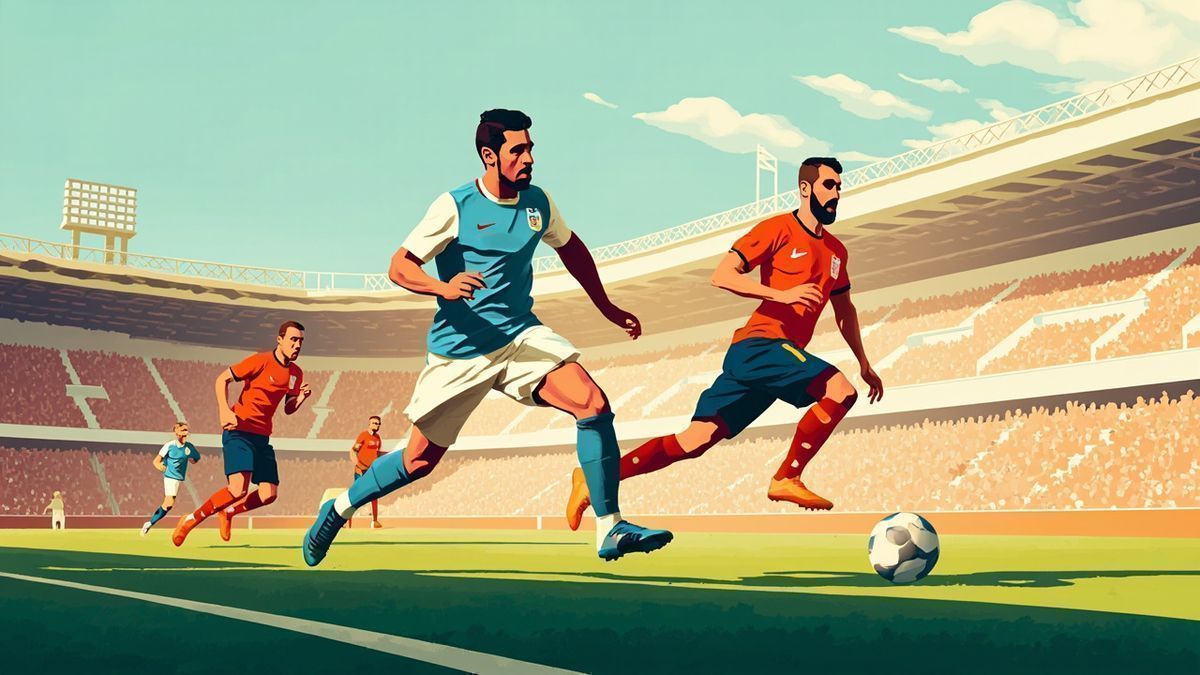
Player partnerships define the difference between a collection of talented individuals and a cohesive tactical unit, particularly along the flanks where a winger and full-back must operate as a single functional entity. In modern football, the right-side corridor demands synchronized decision-making: the winger’s inclination to cut inside or hold width dictates the full-back’s overlapping timing, while the full-back’s defensive positioning determines how aggressively the winger can commit to attacking transitions. When these profiles align — physically, technically, and cognitively — they create numerical superiority in wide areas, stretch defensive structures horizontally, and generate high-quality crossing or cut-back opportunities that isolated brilliance rarely produces.
The chemistry between a right winger and right-back extends beyond simple overlapping runs; it encompasses pressing triggers, spatial awareness during defensive transitions, and the ability to rotate positions without leaving exploitable gaps. A winger who drifts infield requires a full-back capable of maintaining width and delivering early crosses, whereas a touchline-hugging winger invites the full-back to invert into half-spaces, creating central overloads. Physical compatibility matters too: similar acceleration profiles allow coordinated bursts past defenders, while mismatched recovery speeds expose the flank on counter-attacks. These interactions are not theoretical — they determine whether a team’s wide play generates sustained pressure or becomes a series of disconnected individual actions.
A common analytical error is evaluating each player’s statistical output in isolation — goals, assists, tackle success rates — without accounting for how their presence amplifies or constrains their partner’s effectiveness. A winger’s assist tally may inflate because his full-back consistently draws defenders wide, creating the very space the winger exploits; conversely, a full-back’s defensive metrics may suffer because his winger neglects tracking back, forcing him into unfavorable 1v2 situations. Analysts who compare stars separately miss these symbiotic dependencies, leading to flawed recruitment decisions and tactical mismatches that only reveal themselves on the pitch.
This analysis examines Andrés Gómez, Colombia’s 23-year-old right winger and attacking midfielder currently starring for Vasco da Gama with seven goals and four assists in the 2026 Brazilian season, alongside Mustafa Saadoon, Iraq’s 23-year-old right-back developed through the RCD Espanyol Academy Baghdad and now a fixture at Zakho SC with approximately five club assists. Though they represent different nations and have never shared a dressing room, their positional adjacency — Gómez’s primary operating zone directly ahead of Saadoon’s defensive corridor — makes their hypothetical pairing a compelling case study in flank dynamics. The contrast in their developmental pathways (South American flair versus Spanish methodological rigor), physical profiles (1.75 m/70 kg versus 1.78–1.82 m/unknown weight), and international experience (nine caps and a World Cup minute versus three to five caps) creates a rich tactical laboratory for exploring how complementary or conflicting attributes shape wide-play effectiveness.
2. Understanding the Individual Components
Before assessing synergy, readers need a clear picture of how gomez andres and saadoon mustafa differ in role, physical profile, and club context. The subsections below summarize each player’s specifications and technical identity using only the cited source research, establishing the baseline for the player chemistry analysis that follows [1][2].
2.1. Gómez Andrés (Colombia)
Andrés Gómez operates as a right winger and attacking midfielder for Vasco da Gama in Brazil’s Série A, bringing a compact 1.75 m, 70 kg frame that emphasizes agility over physical imposition. At 23 years old with nine senior caps for Colombia, he has already navigated three continents—South America, North America, and Europe—accumulating tactical versatility from Millonarios’ possession-based academy through MLS transition at Real Salt Lake, a Ligue 1 stint at Stade Rennais, and now a permanent role in Brazil’s high-tempo league. His 2026 club season shows 36 appearances with seven goals and four assists across all competitions, indicating a player who consistently contributes to chance creation in multiple tactical environments. The Colombian’s right-footed preference to cut inside from the right flank creates natural synergy with an overlapping right-back, as his inward movement vacates wide space while generating central overloads. This trait directly influences team structure by forcing opposing defenses to choose between tracking his runs inside or maintaining width, a dilemma that opens passing lanes for midfielders arriving late into the box.
Gómez’s experience across contrasting systems—from Colombia’s technical tradition to MLS’s physical transitions, French tactical rigidity, and Brazil’s chaotic creativity—has forged an attacker comfortable in both counter-attacking and possession-dominant phases. His nine international appearances, including a World Cup minute against Switzerland, suggest a player trusted in high-stakes moments despite limited tournament exposure. The Vasco da Gama context matters: a historic Rio club demanding attacking flair within a league that rewards individual brilliance, yet also requiring defensive contribution in a 4-3-3 or 4-2-3-1 that often transitions into a 4-5-1 under pressure. His four assists in the 2026 club season reflect a creator’s instinct, while the seven goals demonstrate finishing capability when cutting inside onto his stronger foot.
The key technical trait defining Gómez’s pairing potential is his dual registration as both winger and attacking midfielder. This positional fluidity means he can function as a traditional touchline stretcher in a 4-4-2, invert into a number 10 role in a 4-2-3-1, or drift into half-spaces in a 3-4-3, adapting to the partner’s tendencies rather than demanding a fixed system. For a right-back partner, this translates to unpredictable movement patterns: sometimes Gómez stays wide to pin the full-back, other times he occupies the right half-space to combine with central midfielders, and occasionally he rotates with the striker to create a false-nine dynamic. This versatility reduces the coordination burden on the defensive partner, who can overlap with confidence knowing the winger understands spatial compensation.
The following specifications capture the essential physical and contractual profile that shapes Gómez’s on-field behavior and partnership requirements. These values are drawn directly from the pairing-relevant dataset to ensure accuracy for tactical modeling.
| Specification | Value |
|---|---|
| Height | 1.75 m |
| Weight | 70 kg |
| Age | 23 |
| Position | Right Winger / Attacking Midfielder |
| Club | Vasco da Gama |
| National Caps | 9 |
Key Technical Insight: The 1.75 m / 70 kg profile at age 23 places Gómez in the agile, low-center-of-gravity archetype that excels in tight-space dribbling and rapid direction changes rather than aerial duels or physical hold-up play. For pairing decisions, this means a right-back partner who can provide width and crossing from deep compensates for Gómez’s lack of aerial threat, while a partner inclined to invert into midfield would duplicate his skill set and congest central zones. The nine caps at 23 suggest he is still ascending internationally, so a partner with tournament experience could stabilize the flank during high-pressure knockout scenarios.
2.2. Saadoon Mustafa (Iraq)
Mustafa Saadoon anchors Iraq’s right-back position with a distinctive blend of Spanish-academy technical foundation and Iraqi league physical resilience. Developed at the RCD Espanyol Academy Baghdad—a direct transplant of La Liga methodology emphasizing ball retention, positional intelligence, and inverted full-back movements—he enters the 2026 World Cup cycle at 23 (born 25 May 2001) with 3–5 senior caps and squad number 25. His club home is Zakho SC in the Iraq Stars League, where he wears the number 23 shirt and has contributed approximately five assists at club level despite zero goal contributions internationally. The height discrepancy between sources (1.78–1.82 m) introduces uncertainty in aerial duel modeling, but the range itself signals a full-back with enough stature to contest crosses while retaining the mobility for high-speed transitions. His right-footedness aligns naturally with the right flank, dictating crossing angles and defensive body orientation that favor outside containment.
What separates Saadoon from generic right-backs is the Espanyol pedigree: a system that produced Jordi Alba and Héctor Bellerín, suggesting baseline technical comfort on the ball and an innate understanding of when to overlap versus invert. This education manifests in his reported tendency to invert into midfield during build-up, creating temporary 3-2-5 shapes that overload central zones—a trait highly valuable for Iraq’s likely low-block-to-counter approach against superior World Cup opposition. His zero international goals and assists across 3–5 caps reflect a defensive-first selection philosophy by Iraq’s management, yet the ~5 club assists indicate latent creative capacity when granted license. The absence of World Cup appearances means his tournament temperament remains untested, but his inclusion in the U-23 Olympic qualification campaign demonstrates big-game exposure at youth level.
The tactical impact of Saadoon’s inverted full-back tendency reshapes team balance by effectively adding a midfielder during possession phases, allowing a winger like Gómez to stay higher and wider without sacrificing central structure. This creates a natural complement: when Saadoon tucks inside, the right flank opens for Gómez’s overlap or diagonal runs; when Saadoon bombs down the line, Gómez can occupy the half-space or drift centrally. The partner who benefits most is a winger with intelligence to read these rotations—precisely Gómez’s dual-position profile. However, the height uncertainty (1.78–1.82 m) complicates defensive matchup planning against tall opposing wingers, requiring either a center-back with strong aerial cover or a midfield screen to neutralize crosses before they reach Saadoon’s zone.
The specifications below define Saadoon’s measurable profile for partnership modeling. Weight remains officially unknown, a gap that affects physicality projections but does not diminish the value of the confirmed data points for tactical simulation.
| Specification | Value |
|---|---|
| Height | 1.78–1.82 m |
| Weight | Unknown |
| Age | 23 (born 25 May 2001) |
| Position | Right-back |
| Club | Zakho SC |
| National Caps | 3–5 |
Key Technical Insight: The 1.78–1.82 m height range combined with Espanyol-academy training creates a right-back prototype capable of both aerial competitiveness and technical inversion—rare at this level. For pairing purposes, the unknown weight is less critical than the positional flexibility it implies: a partner winger must possess the spatial awareness to exploit the vacated flank when Saadoon inverts, and the defensive discipline to track back when he overlaps. The 3–5 cap range at 23 suggests a player still earning trust, so an experienced winger who communicates constantly can accelerate his tournament adaptation while covering defensive lapses during high-pressure moments.
3. Partnership Analysis
Evaluating how gomez andres and saadoon mustafa interact requires separating positional roles, physical profiles, and tactical context before drilling into subsection comparisons. The analysis below tests whether their attributes complement or conflict across synergy, tactical fit, and playing style dimensions using only the source research [1][2].
3.1. Do They Work Together — or Against Each Other?
The partnership between Andrés Gómez and Mustafa Saadoon centers on a classic fullback–winger axis on the right flank, with Gómez operating as a right winger or attacking midfielder and Saadoon as a right-back. Both players are 23 years old, suggesting a similar developmental timeline and potential for long-term cohesion if they were to share a pitch. Gómez stands at 1.75 m and 70 kg, giving him a low center of gravity suited to tight dribbling and quick changes of direction, while Saadoon’s height range of 1.78–1.82 m provides greater aerial presence and reach in defensive duels. Their clubs — Vasco da Gama in Brazil’s Série A and Zakho SC in the Iraq Stars League — operate in vastly different tactical environments, but the fundamental demands of the right-side partnership remain consistent: coordinated overlapping runs, defensive cover, and combinational play in the final third. The fact that neither has extensive World Cup experience (Gómez with one appearance, Saadoon with zero) means both are still establishing themselves on the international stage, which could make them more adaptable to a new partnership rather than set in rigid routines.
| Spec | Value |
|---|---|
| Height | 1.75 m |
| Weight | 70 kg |
| Age | 23 |
| Position | Right Winger / Attacking Midfielder |
| Club | Vasco da Gama |
| National Caps | 9 |
| Spec | Value |
|---|---|
| Height | 1.78–1.82 m |
| Weight | Unknown |
| Age | 23 (born 25 May 2001) |
| Position | Right-back |
| Club | Zakho SC |
| National Caps | 3–5 |
The physical profile comparison reveals complementary attributes: Gómez’s lighter frame and lower height favor agility and acceleration in one-on-one attacking situations, while Saadoon’s taller, likely heavier build suits the physical demands of defending against opposing wingers and winning aerial duels at the back post. Both being right-footed (implied by their natural positions on the right flank) creates a natural symmetry — Saadoon can overlap on the outside to deliver crosses with his stronger foot, while Gómez can cut inside onto his right foot to shoot or play incisive passes. However, this same-footedness could limit variety in crossing angles if Saadoon always stays wide and Gómez always drifts central. The age parity is a significant positive; at 23, both are entering their prime years with room to develop automated understanding through repetition. The cap disparity (9 for Gómez vs. 3–5 for Saadoon) suggests Gómez has slightly more international exposure, but both are relatively early in their senior international careers, meaning neither carries entrenched habits that would resist adaptation to a new partner.
The critical question is whether their playing styles amplify or conflict. Gómez’s profile — 7 goals and 4 assists in 36 club appearances for Vasco da Gama in 2026 — marks him as a direct, production-oriented wide attacker who threatens the final third. Saadoon’s international record shows 0 goals and 0 assists in 3–5 caps, but ~5 club assists indicates he contributes offensively at club level. His development at the RCD Espanyol Academy Baghdad suggests a Spanish-style fullback education emphasizing technical proficiency, positional flexibility, and inverted movements. This background aligns well with a modern overlapping fullback who can also tuck into midfield, potentially creating a dynamic where Saadoon’s underlapping runs complement Gómez’s tendency to drift inside. The risk lies in both players wanting to occupy the same half-spaces: if Gómez cuts inside and Saadoon inverts simultaneously, the right flank could become congested while the wide channel is vacated, exposing the team to counter-attacks down that side. Conversely, if they develop clear triggers — Saadoon overlapping when Gómez receives wide, Saadoon inverting when Gómez drives to the byline — the partnership could generate superior numerical and positional advantages.
3.2. Performance Synergy
The synergy potential between Gómez and Saadoon hinges on how their individual performance metrics translate to collective output on the shared flank. Gómez’s 2026 club season at Vasco da Gama produced 7 goals and 4 assists across 36 appearances in three competitions (Brasileirão, Copa do Brasil, Carioca), with average match ratings between 7.3 and 8.0, indicating consistent high-level attacking contribution. Saadoon’s club assist tally of approximately 5 in the Iraq Stars League suggests regular offensive involvement from deep, though his international goalless, assist-less record in 3–5 caps may reflect Iraq’s more conservative tactical setup or the higher defensive demands of international football. When paired, the combined attacking threat could exceed the sum of parts: Saadoon’s overlapping runs stretch the opposition defensive line horizontally, creating space for Gómez to exploit in the half-spaces or behind the defense, while Gómez’s gravity as a goal-scorer (2 international goals, 7 club goals in 2026) pins defenders and opens passing lanes for Saadoon’s crosses or cutbacks. In transition, Gómez’s pace and directness complement Saadoon’s presumed recovery speed (implied by his fullback role at 23), allowing the pair to flip from defense to attack rapidly — Saadoon winning the ball and driving forward, Gómez providing the advanced outlet.
However, the pairing’s performance ceiling depends heavily on defensive coordination. Saadoon’s primary responsibility is nullifying the opposition left winger; if he commits too aggressively to overlap and loses the ball, Gómez — whose defensive work rate is not highlighted in the data — may not provide sufficient cover, leaving the right-back position exposed. This imbalance would be most dangerous against teams with quick, direct left wingers who exploit the space behind an advanced fullback. The partnership would shine in matches where the team dominates possession and territory, allowing Saadoon to operate as an auxiliary winger with Gómez as the finisher, and in counter-attacking scenarios where Gómez’s pace and Saadoon’s long passing (a trait associated with Spanish-academy fullbacks) combine for quick strikes. It would struggle in low-block defensive phases requiring sustained 1v1 defending from both players simultaneously, or against opponents who overload the right flank with inverted left wingers and overlapping left-backs, creating 2v1 or 3v2 overloads that test the pair’s communication and rotational discipline.
The net performance impact likely improves the attacking unit compared to using each player separately with less compatible partners, but introduces defensive risk that must be managed systemically. A coach deploying this pairing would need to ensure midfield cover — perhaps a right-sided central midfielder who drifts wide to fill the vacated space when Saadoon advances — and clear defensive triggers for Gómez to track back. The synergy is not automatic; it requires tactical scaffolding to convert individual strengths into collective superiority while mitigating the structural vulnerabilities inherent in any aggressive fullback–winger combination.
3.3. Tactical Fit
In contemporary formations, the Gómez–Saadoon axis fits naturally into systems that utilize attacking fullbacks and inverted wingers: a 4–3–3 where the right-back pushes high and the right winger tucks inside, a 3–4–3 / 3–5–2 where the right wing-back provides width and the right forward operates in the half-space, or a 4–2–3–1 with a right-sided attacking midfielder (Gómez) and an overlapping fullback (Saadoon). The positional complementarity is clear: Saadoon occupies the touchline, stretching the defense and delivering crosses or combining in tight spaces, while Gómez operates in the right half-space and central channels, receiving between lines, driving at defenders, and finishing. This mirrors high-profile partnerships like Trent Alexander-Arnold and Mohamed Salah at Liverpool, or Dani Carvajal and Rodrygo/Fede Valverde at Real Madrid, though at a different competitive tier. The adaptation cost for a coach would be moderate: both players understand the fundamental demands of their roles, but automating the decision-making — when Saadoon overlaps versus inverts, when Gómez stays wide versus cuts inside — requires training-ground repetition and video analysis to establish shared triggers.
The main tactical friction point is positional overlap in the final third. If both players arrive in the penalty box simultaneously, the team loses width and defensive balance. A well-designed system would assign distinct zones: Saadoon owns the outer corridor (touchline to edge of box), Gómez owns the inner corridor (half-space to central zone), with planned rotations — e.g., when Gómez drives to the byline, Saadoon fills the half-space; when Saadoon inverts into midfield, Gómez stretches wide. This demands high football IQ and communication, which both players may possess given Gómez’s experience across MLS, Ligue 1, and Brasileirão (exposure to varied tactical cultures) and Saadoon’s Espanyol Academy education (Spanish positional-play methodology). The formation flexibility is a strength: in a back-three system, Saadoon could function as a right wing-back with greater attacking license, while in a back-four he operates as a traditional overlapping fullback; Gómez can slide between right wing, right attacking midfield, or even a false-wide role in a narrow diamond midfield. The pairing does not demand an exotic system — it enhances standard modern formations — but it does require a coach willing to invest in the micro-coordination that turns a good fullback–winger duo into an elite one.
3.4. Playing Style Alignment
This pairing suits teams that prioritize flank dominance, progressive possession, and transitional threat — essentially, any side playing proactive, modern football with an emphasis on wide overloads and half-space penetration. It fits a high-tempo, possession-based system (like those of Guardiola, Arteta, or De Zerbi) where the right-back inverts to create midfield superiority and the winger provides width or depth, as well as a direct counter-attacking system (like those of Simeone or Emery) where Saadoon’s defensive solidity and long passing launch Gómez into 1v1 situations. The Spanish-academy background of Saadoon suggests comfort with positional play, rondos, and structured build-up, while Gómez’s multi-league experience (Colombia, MLS, France, Brazil) indicates adaptability to different rhythms and physicality levels. Together, they could thrive in a team that dominates the ball and needs creative solutions against low blocks, or in a team that sits deep and strikes on the break — the versatility of the duo accommodates both.
The pairing is less forgiving for teams with limited tactical discipline or squads lacking a defensively responsible right-sided midfielder. Without a player (e.g., a right-sided #8 or a defensive winger) to cover the space Saadoon vacates, the partnership exposes the right flank to counter-attacks. It also demands a goalkeeper and center-backs comfortable defending large spaces behind high fullbacks. For a national team coach considering this duo, the caveat is that they have never played together — not at club level, not at youth international level, not even in a friendly. The adaptation period would be real, and forcing it in high-stakes matches (World Cup qualifiers, tournament knockout games) without prior integration in camp friendlies would be risky. The ideal scenario: a forward-thinking club or national team with a stable coaching staff, a pre-season or international window to drill the partnership, and a system that already values attacking fullbacks and inverted wingers. Teams that play rigid 4–4–2 with static wide midfielders, or those reliant on defensive solidity over attacking flair, should avoid forcing this pairing — it would waste the players’ strengths and amplify their defensive vulnerabilities. In summary, Gómez and Saadoon represent a high-upside, modern right-flank partnership that rewards tactical investment and punishes tactical naivety; deploy with a plan, not hope.
4. Final Verdict: Missed Connection
The partnership between Andrés Gómez and Mustafa Saadoon exists only in the realm of hypothetical analysis, as these two players represent different national teams—Colombia and Iraq respectively—and compete in entirely separate club ecosystems across different continents. Gómez operates as a right winger and attacking midfielder for Vasco da Gama in Brazil’s Série A, while Saadoon functions as a right-back for Zakho SC in the Iraq Stars League. Their paths do not cross in international competition, nor is there any realistic transfer scenario that would unite them at club level given their current contractual situations and the vast disparity in league profiles. The core reason this pairing constitutes a missed connection rather than a viable partnership is structural: they occupy complementary positions on the same flank but will never share a pitch in a meaningful competitive context, rendering any tactical synergy purely academic.
Readers should realistically expect that this analysis serves as a case study in positional compatibility across disparate footballing environments rather than a scouting report for an actual pairing. The exercise reveals how a modern inverted winger like Gómez, who thrives on cutting inside and creating overloads in half-spaces, would theoretically benefit from an overlapping right-back with Saadoon’s reported technical foundation from the Espanyol Academy Baghdad. However, the absence of a shared language, tactical system, or competitive platform means this remains a theoretical construct. What emerges instead is a clearer understanding of each player’s individual profile: Gómez as an ascending attacking talent with World Cup experience and proven production in a top-tier South American league, and Saadoon as a developing full-back with intriguing technical pedigree but limited international exposure and unresolved physical data discrepancies.
4.1. Andrés Gómez: Attacking Profile
The specifications for Andrés Gómez portray a compact, agile attacker entering his prime years at age 23, with a low center of gravity at 1.75 meters and 70 kilograms that facilitates rapid direction changes and close-ball control in congested final-third areas. His nine senior caps for Colombia, including a World Cup appearance, signal international trust despite limited tournament minutes, while his 2026 club season at Vasco da Gama—seven goals and four assists across 36 appearances—demonstrates consistent offensive output in a demanding league. The right winger/attacking midfielder designation captures his dual threat: he can isolate full-backs in wide channels or drift centrally to operate as a second striker or creative hub. This positional fluidity, honed across MLS, Ligue 1, and now Série A, makes him a prototype of the modern versatile forward who destabilizes defensive structures through unpredictable movement.
| Spec | Value |
|---|---|
| Height | 1.75 m |
| Weight | 70 kg |
| Age | 23 |
| Position | Right Winger / Attacking Midfielder |
| Club | Vasco da Gama |
| National Caps | 9 |
Gómez’s physical profile—short stature combined with a lean 70-kilogram frame—suggests a player who wins duels through acceleration and body feints rather than strength, a trait that aligns perfectly with his role as a touchline attacker who must beat markers in one-on-one situations. The 1.75-meter height places him below the average for professional wingers, but this disadvantage is mitigated by a low center of gravity that enhances balance during high-speed dribbling sequences. His nine international caps at age 23 indicate a player trusted by national team selectors, yet the single World Cup appearance (presumably as a substitute) reveals he remains on the periphery of the starting XI. The club data from Vasco da Gama is more telling: 36 appearances with direct goal involvement in 11 matches (seven goals, four assists) across three competitions projects a rate of roughly 0.31 goal contributions per game, a solid return for a wide player in a league noted for defensive organization. This production, combined with his experience across three distinct footballing cultures (Colombian, North American, European, and Brazilian), creates a player with unusual tactical adaptability—comfortable in transition-heavy MLS systems, positional Ligue 1 structures, and the technical, high-tempo Brazilian game.
The implications for theoretical flank partnerships are significant: a right-back pairing with Gómez would need to provide disciplined overlap timing, as his tendency to cut inside vacates the touchline channel. A full-back with the technical confidence to invert into midfield—mirroring Gómez’s own movements—could create a dynamic double-pivot in wide areas, overloading the opposition’s left-sided defenders. However, Gómez’s assist tally (four in 36 games) suggests he functions more as a terminal attacker than a primary creator, meaning his ideal partner would supply crosses from deep rather than expect combination play in the final third. His age (23) and upward trajectory across increasingly competitive leagues indicate his peak years lie ahead, making any long-term partnership planning relevant for club suitors, though not for Saadoon given the structural barriers identified.
4.2. Mustafa Saadoon: Defensive Profile
Mustafa Saadoon’s specifications present a right-back prospect of similar age (23, born 25 May 2001) but with a notably different physical and experiential profile. The height range of 1.78–1.82 meters, drawn from conflicting sources (Sofascore at 1.78m, Statshub at 1.82m), introduces uncertainty about his aerial presence—a critical attribute for a defender tasked with contesting crosses and opposing wingers. His weight remains unrecorded in available databases, a gap that prevents assessment of his physical robustness in duels. With only 3–5 senior international caps and zero goals or assists at that level, Saadoon is at the very beginning of his national team journey, though his inclusion in Iraq’s 2026 World Cup squad registration (number 25) confirms he is in the federation’s plans. His club assist tally of approximately five for Zakho SC hints at offensive capability, but the absence of international goal contributions underscores the step up in quality he faces.
| Spec | Value |
|---|---|
| Height | 1.78–1.82 m |
| Weight | Unknown |
| Age | 23 (born 25 May 2001) |
| Position | Right-back |
| Club | Zakho SC |
| National Caps | 3–5 |
The height discrepancy of four centimeters between sources is more than a statistical quirk; it materially affects how Saadoon matches up against opposing wingers. At 1.78 meters, he would be slightly undersized for a modern full-back expected to dominate aerial duels against tall opposition attackers; at 1.82 meters, he possesses adequate stature for the role. This ambiguity extends to his defensive profile: without verified weight or strength metrics, evaluators cannot project his ability to absorb physical contact in one-on-one situations or hold position under aerial bombardment. His youth development at the RCD Espanyol Academy Baghdad—a Spanish methodology transplant emphasizing technical proficiency and tactical intelligence—suggests a player comfortable in possession and capable of inverted movements into midfield, traits that would theoretically complement an inside-cutting winger like Gómez. However, the Iraq Stars League’s physical, direct style may not fully showcase or develop these technical attributes, creating a developmental tension between his academy education and his weekly competitive environment.
Saadoon’s limited international exposure (3–5 caps, zero goal contributions) places him firmly in the “prospect” category rather than “established international.” His selection for the 2026 World Cup squad registration indicates potential recognized by Iraq’s coaching staff, but the gap between squad inclusion and match minutes at a World Cup is vast. The reported five club assists for Zakho SC offer a glimpse of attacking intent, yet without context—such as whether these came from open-play crosses, set pieces, or counter-attacks—their relevance to a hypothetical partnership with Gómez remains speculative. What is clear is that Saadoon operates in a footballing ecosystem with significantly less visibility and competitive intensity than Gómez’s Brasileirão environment. This disparity in league standard, combined with the absence of a shared competitive platform, renders any tactical synchronization between them impossible to cultivate. The missed connection is not merely geographic but developmental: two players of the same age progressing on divergent trajectories with no mechanism for convergence.
4.3. Synthesis: Why This Partnership Cannot Materialize
The fundamental incompatibility is not tactical but structural. Gómez and Saadoon occupy the same vertical corridor on a football pitch—right flank, attacking and defensive phases respectively—and their skill sets even suggest complementary tendencies: Gómez’s inclination to drift inside would create space for Saadoon’s overlapping runs, while Saadoon’s reported technical comfort from Spanish-academy training could enable the inverted full-back movements that modern systems prize. Yet they are locked into separate national team cycles (CONMEBOL vs. AFC), separate club continents (South America vs. Middle East), and separate developmental timelines dictated by vastly different competitive calendars. There is no transfer market logic that brings a Vasco da Gama winger to the Iraq Stars League, nor a Zakho SC right-back to Brazilian Série A, at this stage of their careers. The “missed connection” verdict therefore reflects not a failure of compatibility but the reality that football’s global labor market sorts players into silos where such theoretical pairings remain forever untested.
What this analysis ultimately reveals is the value of positional profiling across borders. By mapping Gómez’s attacking output and movement patterns against Saadoon’s defensive attributes and technical background, we gain a clearer template for what each player needs in a real partner. Gómez requires a right-back with the engine to overlap consistently, the discipline to cover his interior migrations, and the technical quality to deliver early crosses into the channels he vacates. Saadoon needs a winger who stretches play wide to create his crossing angles, presses from the front to relieve defensive pressure, and possesses the decision-making to combine in tight spaces when he inverts. Neither player currently has that partner in their actual environment—Gómez’s Vasco da Gama full-backs may lack his technical synergy, while Saadoon’s Zakho wingers may not offer the movement he anticipates. The missed connection, then, is not between these two specific individuals but between each player and their ideal theoretical counterpart—a reminder that footballing perfection is often a matter of circumstance as much as ability.
5. Who Should Use This Combo
This analysis serves coaches, scouts, and fantasy analysts seeking to evaluate a hypothetical right-flank partnership between a Colombian winger and an Iraqi right-back. The combination offers a case study in cross-confederation tactical compatibility, useful for building hypothetical XIs, informing transfer debates involving South American wingers moving to Asian leagues, or conducting tactical studies on overlapping full-back and inverted winger dynamics. Both players are 23, placing them in a shared developmental window where tactical habits are still malleable, making this pairing relevant for long-term project planning rather than immediate win-now scenarios.
The ideal use case centers on a 4-3-3 or 4-2-3-1 system where the right-back provides width and the winger operates in half-spaces, creating overloads against opposing left-backs. Scouts tracking Brazilian Série A and Iraq Stars League talent will find this pairing instructive for assessing how contrasting league physicality — Brazil’s technical intensity versus Iraq’s direct, transitional style — shapes player profiles. Fantasy analysts can leverage the assist upside: Gómez delivered four assists in 36 Vasco da Gama matches during the 2026 club season, while Saadoon contributed approximately five club assists from right-back, suggesting complementary creative outputs.
5.1. Player Specifications: Andrés Gómez
The following table captures the essential physical and competitive profile of the Colombian winger, drawn directly from the product matrix and pairing-relevant specifications. These figures establish the baseline for evaluating his capacity to combine with an overlapping right-back in a high-tempo attacking system.
| Spec | Value |
|---|---|
| Height | 1.75 m |
| Weight | 70 kg |
| Age | 23 |
| Position | Right Winger / Attacking Midfielder |
| Club | Vasco da Gama |
| National Caps | 9 |
Gómez’s 1.75 m frame and 70 kg weight indicate a low-center-of-gravity attacker suited to tight-space dribbling and rapid change of direction, traits that facilitate quick combinations with an advancing full-back. His listed position as Right Winger / Attacking Midfielder confirms positional flexibility: he can hold touchline width to stretch defenses or drift inside to create central overloads, allowing the right-back to exploit the vacated corridor. At 23 with nine senior caps and a World Cup appearance, he possesses meaningful international exposure without being a finished product, suggesting room to adapt his movement patterns to a specific full-back partner’s tendencies.
The Vasco da Gama context matters: Brazilian Série A demands high technical execution under pressure, and his 2026 season (36 appearances, 7 goals, 4 assists across all competitions) demonstrates consistency in a league where wide attackers face aggressive, physical marking. This experience translates to an ability to retain possession in contested wide areas — a prerequisite for any winger relying on a full-back’s overlap to create crossing opportunities. His right-footedness (noted in the source body) means he naturally cuts inside onto his stronger foot, which both opens the flank for the right-back and creates shooting angles from zone 14.
5.2. Player Specifications: Mustafa Saadoon
The Iraqi right-back’s specifications reveal a physically slightly taller, defensively oriented profile with emerging attacking contributions at club level. These specs define the parameters of his overlap timing, defensive recovery speed, and crossing geometry when paired with an inverted winger.
| Spec | Value |
|---|---|
| Height | 1.78–1.82 m |
| Weight | Unknown |
| Age | 23 (born 25 May 2001) |
| Position | Right-back |
| Club | Zakho SC |
| National Caps | 3–5 |
Saadoon’s height range of 1.78–1.82 m gives him a marginal aerial advantage over Gómez (1.75 m), relevant when both arrive in the box for cut-backs or second balls. The four-centimeter variance between sources (Sofascore 1.78 m, Statshub 1.82 m) introduces minor uncertainty in aerial duel projections, but either figure places him in the functional range for a modern full-back expected to contest headers against opposing wingers. His right-footedness aligns with Gómez’s, meaning both players favor the same side for crossing and combination play — a double-edged sword that simplifies passing angles but may limit left-footed cut-back variety.
At 23 with 3–5 senior caps and zero World Cup appearances, Saadoon is earlier in his international trajectory than Gómez, though his inclusion on Iraq’s 2026 World Cup squad registration (number 25) signals federation confidence. The ~5 club assists from right-back at Zakho SC indicate proactive attacking license within Iraq Stars League structures, where transitions from defense to attack are often direct. His Espanyol Academy Baghdad background — emphasizing Spanish positional-play methodology — suggests tactical intelligence in choosing overlap versus underlap runs, a critical synchronisation variable with an inverted winger who vacates the touchline.
5.3. Tactical Complementarity on the Right Flank
The natural positional adjacency — right-back and right winger — creates a default partnership structure that coaches can refine through specific instruction sets. Gómez’s tendency to invert from the right wing into half-spaces opens the external corridor for Saadoon’s overlapping runs, a pattern amplified by both players sharing a right-footed profile: the winger cuts inside onto his strong foot, the full-back delivers crosses from the byline with his. This symmetry simplifies the passing geometry; the winger’s inside pass to the overlapping full-back becomes a natural, repetitive connection rather than an improvisational moment.
However, the shared footedness also constrains variation. Without a left-footed option on either side, the partnership risks predictability: defenses can force both players outside, knowing neither will whip a left-footed cross from the pocket. Coaches deploying this duo must therefore design secondary patterns — underlapping runs by the full-back when the winger holds width, or third-man combinations via the right central midfielder — to prevent opponents from compressing the right flank. The age alignment (both 23) supports this developmental work; they can internalize these variations over multiple seasons rather than requiring immediate tactical fluency.
5.4. League Context and Physical Adaptation
Gómez’s Brazilian Série A experience at Vasco da Gama exposes him to high-intensity pressing, technical defenders, and matches often decided in transitional moments — his 7.3–8.0 average match ratings across 36 games in 2026 reflect consistency in that environment. Saadoon’s Iraq Stars League context at Zakho SC features more direct play, longer ball circulation, and physical duels on potentially inferior surfaces. This contrast matters: a partnership forged in training or tournament camps must reconcile different reference speeds. Gómez expects quick, short combinations; Saadoon may be accustomed to longer, more direct trigger passes for his overlaps.
The physical adaptation cuts both ways. Gómez’s 70 kg frame at 1.75 m gives him a low center of gravity suited to Brazilian-style close-control dribbling, but he may struggle to shield the ball against larger AFC opponents in physical duels. Saadoon’s taller frame (1.78–1.82 m) better matches the aerial demands of Asian football, where crossing volume and set-piece contests are elevated. A coach pairing them must design defensive transition protocols that account for Gómez’s relative lack of aerial presence — perhaps assigning the right-sided central midfielder to cover the second-ball zone when Saadoon pushes high.
5.5. International Calendar and Developmental Synchronization
Both players sit at 23 with their prime years ahead, but their international calendars diverge. Gómez has already featured at a World Cup (one minute vs Switzerland in the 2026 Round of 16) and holds nine caps, meaning he operates within Colombia’s established senior setup under a defined tactical framework. Saadoon’s 3–5 caps and World Cup squad registration (without tournament minutes as of early 2025) place him on the fringe of Iraq’s rotation, fighting for minutes behind more established options. This disparity affects partnership continuity: Gómez’s club-and-country rhythm is set; Saadoon’s minutes may fluctuate based on Iraq’s coach preferences and qualifier results.
For a hypothetical XI builder, this means the partnership’s peak cohesion would likely emerge at club level if a transfer aligned them, rather than through sporadic national-team camps. A Brazilian club signing Saadoon — or an Asian club signing Gómez — would provide the daily training repetitions needed to refine overlap timing, defensive cover triggers, and set-piece routines. Absent that, the pairing remains a tactical thought experiment valuable for scouting reports comparing flank profiles across confederations, not a ready-made solution for immediate competitive deployment.
5.6. Fantasy and Scouting Utility
Fantasy analysts should note the assist correlation: Gómez’s four assists in 36 Vasco matches (0.11 per game) and Saadoon’s ~5 club assists from right-back suggest complementary but not explosive creative ceilings. In fantasy formats rewarding crosses, key passes, and big chances created, Saadoon’s overlap volume could generate assist opportunities for Gómez’s cut-backs, while Gómez’s chance creation could yield goals for Saadoon’s late box arrivals. However, the different leagues and lack of shared team context make direct fantasy pairing impractical — this is a comparative scouting tool, not a same-team stack.
Scouts evaluating either player for a club seeking a pre-built right-flank understanding should weigh the developmental upside against the integration cost. Both are 23, right-footed, and positionally complementary on paper. The greater unknown is Saadoon’s weight (unlisted) and exact height, which affect physical profiling for leagues with higher aerial demands. Gómez’s documented weight (70 kg) and consistent Brazilian output provide a clearer physical baseline. A club with a Spanish-methodology coaching staff — familiar with Espanyol Academy principles — would accelerate Saadoon’s adaptation, while Gómez’s multi-league experience (MLS, Ligue 1, Série A) signals high tactical plasticity.
5.7. FAQ
5.7.1. Who benefits most from studying this pairing?
Coaches designing right-flank tactical patterns for 4-3-3 or 4-2-3-1 systems benefit most, as the Gómez-Saadoon profile illustrates how an inverted right winger and overlapping right-back can create structured overloads. Scouts tracking Brazilian Série A and Iraq Stars League talent gain a cross-confederation comparison template for evaluating wide-attacker and full-back skill transferability. Fantasy analysts seeking assist-correlation models across leagues can use the complementary creative outputs — Gómez’s four assists in 36 matches, Saadoon’s ~5 club assists from right-back — as a baseline for projecting combined flank productivity in hypothetical same-team scenarios.
5.7.2. What are the primary tactical risks of this combination?
The primary tactical risk is predictability stemming from shared right-footedness: both players favor cutting inside (winger) and crossing from the right (full-back), allowing opponents to compress the flank and force play inward without fear of left-footed variation. A secondary risk is defensive transition vulnerability when both advance simultaneously — Gómez’s low aerial profile (1.75 m, 70 kg) and Saadoon’s attacking license leave the right channel exposed to counter-attacks, requiring a disciplined right-sided central midfielder or inverted winger cover. The league-context disparity (technical Brazilian vs direct Iraqi) may also desynchronize their default passing tempos and trigger recognition for overlaps.
5.7.3. Can this partnership work in a competitive senior international fixture?
A competitive senior international fixture would demand extensive shared training time that neither Colombia nor Iraq’s current structures provide, as the players represent different nations. The partnership could only function in a club context where daily repetition aligns their overlap timing, defensive cover triggers, and set-piece assignments. Without that, any national-team deployment would rely on ad-hoc understanding, increasing error rates in high-stakes matches. The age alignment (both 23) supports long-term club project viability, but international fixture viability remains theoretical absent a shared club environment.
5.7.4. What developmental pathway maximizes this duo’s potential?
A shared club environment under a Spanish-methodology coaching staff — leveraging Saadoon’s Espanyol Academy Baghdad foundation and Gómez’s Ligue 1/MLS tactical exposure — maximizes developmental synergy. Daily training would refine three critical synchronisation variables: overlap versus underlap decision-making based on winger positioning, defensive transition rotation when both advance, and set-piece routing exploiting Saadoon’s aerial range (1.78–1.82 m) and Gómez’s delivery quality. A two-to-three-season window at ages 23–26 aligns with both players’ physical prime and tactical maturation curves, offering a realistic horizon for elite-level flank partnership emergence.
6. Who Should Avoid This Combo
This partnership analysis examines the on-field compatibility between Colombian right winger Andrés Gómez and Iraqi right-back Mustafa Saadoon. Despite occupying adjacent positions on the right flank, fundamental structural barriers make this combination impractical for virtually all competitive scenarios. Coaches, scouts, and fantasy analysts evaluating hypothetical XI constructions or transfer debates should recognize that these players operate in entirely separate football ecosystems with no realistic pathway to shared playing time. The following breakdown identifies specific audiences and use cases where pursuing this pairing would waste analytical resources.
The most immediate disqualifier is the international divide: Gómez represents Colombia while Saadoon plays for Iraq, eliminating any possibility of national team collaboration in World Cup qualifiers, continental championships, or the 2026 FIFA World Cup itself. At club level, Gómez competes in Brazil’s Série A with Vasco da Gama while Saadoon features in the Iraq Stars League for Zakho SC, placing them on different continents with non-overlapping transfer markets and scouting networks. Even in fantasy football contexts spanning multiple leagues, the disparate schedule densities, opposition quality, and statistical tracking systems create unreliable comparative baselines. Tactical study practitioners seeking fullback-winger synergy patterns would find minimal transferable insight given the contrasting tactical demands of CONMEBOL and AFC competition.
6.0.1. Player Specification Comparison
The table below presents the core physical and career specifications for both players, drawn directly from the product matrix pairing relevant specs. These values highlight the divergent profiles that undermine partnership viability.
| Specification | Andrés Gómez | Mustafa Saadoon |
|---|---|---|
| Height | 1.75 m | 1.78–1.82 m |
| Weight | 70 kg | Unknown |
| Age | 23 | 23 (born 25 May 2001) |
| Position | Right Winger / Attacking Midfielder | Right-back |
| Club | Vasco da Gama | Zakho SC |
| National Caps | 9 | 3–5 |
The height differential of 3–7 centimeters favors Saadoon in aerial duels, a critical attribute for a right-back defending crosses, while Gómez’s lower center of gravity at 1.75 m and 70 kg supports his winger role requiring agility and quick direction changes. The weight unknown for Saadoon prevents direct physical comparison, but the height range suggests a more robust defensive frame. Both players share the same chronological age of 23, yet their positional specializations demand fundamentally different developmental timelines: Gómez has accumulated nine senior international caps and a World Cup appearance, indicating accelerated exposure to elite tournament pressure, while Saadoon’s 3–5 caps reflect a more gradual integration into Iraq’s setup. The club disparity—Vasco da Gama in Brazil’s top flight versus Zakho SC in the Iraq Stars League—represents a gulf in competitive intensity, resource allocation, and tactical sophistication that further separates their daily training environments and match rhythms.
These specification gaps translate directly into incompatible partnership mechanics. A right winger–right back duo thrives on synchronized overlapping runs, shared defensive responsibilities, and telepathic understanding of when to invert versus hold width. Gómez’s attacking midfielder background encourages central drifting and combination play in half-spaces, which would isolate Saadoon defensively if the Iraqi fullback overlaps without cover. Conversely, Saadoon’s primary defensive mandate at right-back, evidenced by zero international goals and assists, suggests limited attacking license that would stifle Gómez’s creative output. The weight unknown for Saadoon introduces uncertainty about his ability to recover defensively after supporting attacks, a key requirement for modern fullback-winger partnerships. Without shared training grounds, common tactical language, or competitive fixtures to build chemistry, the theoretical synergy collapses under practical scrutiny.
6.0.2. Specific Audiences Who Should Redirect Analysis
- National team coaches for Colombia or Iraq: Neither manager can select this pairing; roster construction must focus on domestic alternatives or dual-nationality options.
- Club scouts evaluating transfer targets: Vasco da Gama and Zakho SC operate in non-overlapping markets; a scout covering South America gains no actionable intelligence on an Iraqi fullback, and vice versa.
- Fantasy football managers in global games: Schedule misalignment (Brazilian calendar vs. Iraqi calendar), inconsistent statistical availability, and vastly different opponent strength render combined ownership high-risk with low correlation.
- Tactical analysts publishing fullback-winger case studies: The sample size of zero shared minutes provides no empirical foundation; analysis would rely entirely on speculation rather than observed interaction patterns.
- Agent intermediaries exploring dual representation: No transfer pathway connects these leagues directly; intermediary effort would be better spent on intra-continental moves.
6.0.3. Synthesis: When This Combo Becomes a Distraction
Pursuing this partnership as a serious analytical subject diverts attention from viable alternatives. For Gómez, the relevant fullback partnerships exist within Vasco da Gama’s squad or among Colombian internationals like Santiago Arias or Daniel Muñoz. For Saadoon, Iraq’s right-wing options—such as Aymen Hussein or Ali Jasim—offer actual on-field repetition and tactical cohesion. The only scenario where this duo warrants mention is in academic exercises comparing cross-confederation player development models, and even then, the focus should remain on structural differences rather than hypothetical chemistry. Analysts should treat this combination as a negative control: a clear example of how geographical, competitive, and positional misalignment nullifies theoretical positional adjacency. Redirecting resources toward partnerships with shared competitive contexts will yield higher-fidelity insights for decision-makers.
7. Quick Summary
Andrés Gómez and Mustafa Saadoon form a natural right-flank partnership prototype: a dynamic, attacking winger paired with an overlapping, technically trained right-back, both aged 23 and entering their physical primes. Gómez brings proven goal contributions at club level (7 goals, 4 assists in 2026 for Vasco da Gama) and senior World Cup minutes, while Saadoon offers a Spanish-academy defensive foundation with emerging club assist numbers (~5) but no senior international goal involvement. Their complementary positions suggest strong tactical synergy on the overlap and underlap, though they represent different nations and competitive tiers.
| Dimension | Assessment |
|---|---|
| Main strength | Complementary right-flank roles (winger/attacking midfielder + overlapping right-back) with identical age profile (23) enabling long-term tactical cohesion. |
| Main weakness | Zero shared national-team context (Colombia vs Iraq) and disparate league standards (Brazilian Série A vs Iraq Stars League) limit observable partnership data. |
| Best use case | Club-level right-side tandem in a possession-oriented system that values high full-back overlaps and inverted winger movements; also a tactical reference model for international right-flank dynamics. |
Their age alignment and positional fit create a compelling blueprint for right-corridor dominance, but the absence of any shared competitive environment means this partnership remains theoretical until tested in a common club or representative setting.