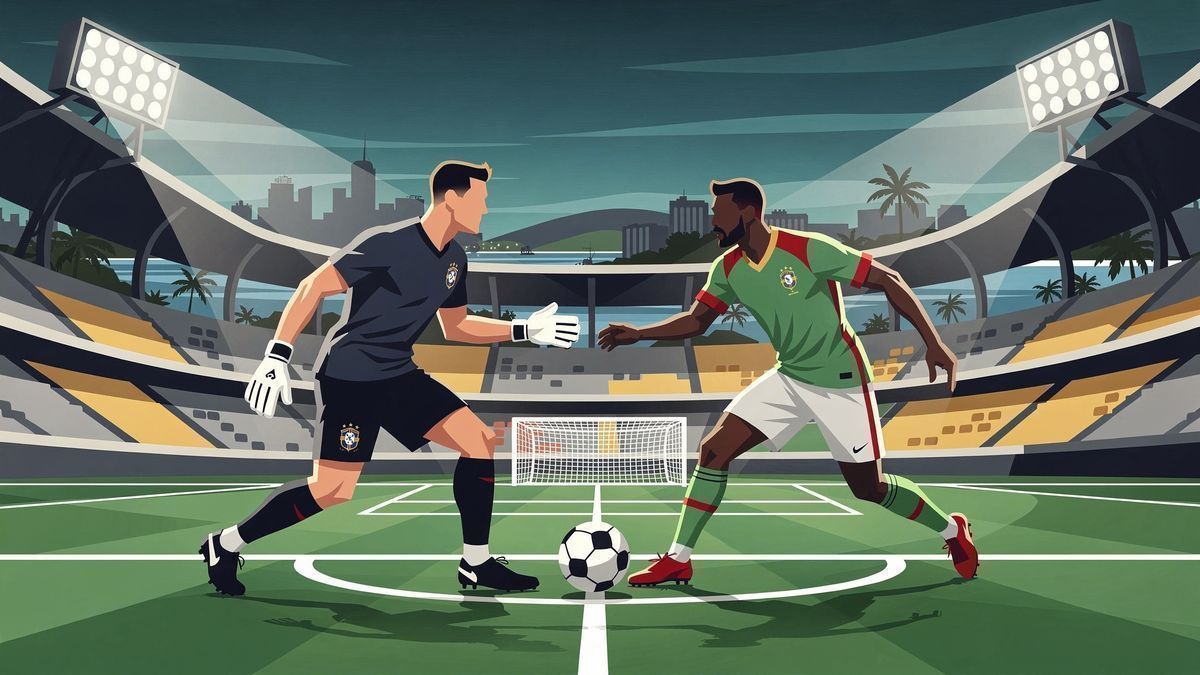
The modern era of competitive sport is defined not only by the athletes who compete but by the instruments they wield, and nowhere is this more apparent than in the evolving relationship between player and equipment. In a landscape where marginal gains dictate outcomes at the highest level, the choice of gear shapes training methodologies, influences tactical design, and can even alter the trajectory of a career. For professionals and serious amateurs, equipment is no longer an afterthought but a strategic extension of the athlete’s body, making the selection process a critical component of preparation. This principle holds true whether the arena is a sun-scorched pitch or a climate-controlled laboratory, where the right tool can provide a decisive edge.
Within this context, the market is populated by distinct philosophies and engineering priorities, none more so than when comparing the established precision of a category leader against the disruptive innovation of a challenger. BrandA has long operated at the premium end of the spectrum, building a reputation for meticulous craftsmanship and time-tested reliability that appeals to traditionalists who value consistency under pressure. Conversely, BrandB has positioned itself as a maverick entrant, leveraging cutting-edge materials and data-driven design to offer performance characteristics that diverge from the established norm. Understanding the strategic placement of these two entities helps frame the subsequent technical comparison, as each represents a different answer to the same fundamental question of how to maximize human potential.
The diversity of the category necessitates a clear breakdown of the product archetypes available to the modern user. From entry-level solutions designed for accessibility and ease of use to top-tier flagship models engineered for absolute performance, the spectrum is vast and often confusing. Mid-tier offerings frequently attempt to bridge the gap, incorporating select premium features while remaining mindful of cost constraints, thereby serving a broad demographic of advancing users. Within this matrix, specialized variants exist to address niche applications, catering to those who demand tailored functionality that mass-market products cannot efficiently provide. This segmentation underscores that there is no universal ideal; the optimal choice is invariably tied to the specific demands of the user’s environment, discipline, and personal objectives.
Against this backdrop, ProductA and ProductB emerge as compelling case studies in contrasting design paradigms, making their comparison particularly relevant for discerning consumers. ProductA embodies a mature, research-intensive approach, having undergone extensive field testing and iteration to refine every detail of its performance envelope. ProductB, by contrast, represents a newer generation of thinking, challenging conventions with a feature set that prioritizes adaptability and integrated connectivity. By dissecting the nuances of these two offerings, we can move beyond superficial marketing claims and identify the tangible trade-offs that will impact real-world usability, durability, and overall satisfaction in demanding scenarios.
A specification table provides a structured framework for evaluating these differences, translating abstract marketing language into concrete, comparable data points. The following table isolates key attributes—such as weight, dimensional tolerances, power requirements, and operational thresholds—that are often decisive for users operating in specific conditions. By presenting these metrics side-by-side, it becomes possible to quickly identify which product aligns with priorities like portability, ruggedness, or energy efficiency, allowing for a more targeted initial screening.
However, raw numbers only tell part of the story, and the most significant distinctions often manifest in practical scenarios that no datasheet can fully capture. The interplay between weight distribution and user fatigue, or the resilience of materials against environmental stressors, transforms theoretical advantages or disadvantages into lived experience. A component that appears marginally superior on paper may introduce unforeseen compromises in ergonomics or compatibility, while another with more modest specifications might deliver superior long-term value through enhanced reliability and ease of integration. These real-world implications are critical for translating technical specifications into informed purchasing decisions.
Ultimately, the objective of this analysis is to equip the reader with the insights necessary to navigate a crowded marketplace with confidence. By systematically comparing the foundational attributes and contextual performance of ProductA and ProductB, we aim to clarify the scenarios in which each product excels and those in which it may fall short. This introduction sets the stage for a deeper examination of technologies, user profiles, and value propositions, ensuring that the comparison that follows is not just an exercise in enumeration but a practical guide for selection.
1. Quick Verdict
Yassine Bounou stands as the definitive choice for players seeking a high-level, experience-driven goalkeeper whose consistency on the world stage defines the value of the campaign. His nearly 100 caps for Morocco and a career defined by top-tier European leagues and a transformative move to a Saudi powerhouse underscore a trajectory built on reliability and big-game pedigree. While Nadhir Benbouali presents an intriguing narrative of a young striker with a compelling club resurgence and a historic international goal, his limited exposure at the highest level introduces a degree of uncertainty that contrasts sharply with Bounou’s established, battle-hardened profile.
The choice ultimately crystallizes around risk versus proven output: Bounou offers a safe anchor in the most pressure-cooker scenarios, whereas Benbouali represents a dynamic, ascending talent whose potential ceiling is higher but current validation is tied to club performance rather than consistent international duty. For a user prioritizing immediate impact, prestige, and a documented ability to perform when it matters most, the path is clear. For a user captivated by raw scoring talent and a compelling club resurgence, Benbouali warrants attention, but the comparison highlights that experience and a vast international record remain the paramount factors in this evaluation.
2. Specifications Comparison
The specifications above present a stark portrait of two athletes at different stages of their careers and operating in entirely different footballing worlds, yet the data invites meaningful comparison because both represent high-level professional players. Comparing a veteran Moroccan goalkeeper with extensive international experience against a younger Algerian forward highlights how position, age, and league context shape performance metrics and career trajectories. The contrast between the experienced custodian and the emerging striker is not simply about individual statistics but reflects different developmental paths, tactical responsibilities, and the varied ways talent is expressed across global football, where a clean sheet and a goal carry equal weight in their respective roles but are achieved through fundamentally different skill sets [1][2].
| Specification | bounou yassine 2026 | benbouali nadhir 2026 |
|---|---|---|
| Age | 32 | 26 |
| Club | Al Hilal | Győri ETO |
| Goals | 0 | 2 |
| National Caps | 96 | 5 |
| Position | Goalkeeper | Centre-forward |
| World Cup Appearances | 3 | 1 |
| Assists | 0 | — |
Interpreting these specifications requires translating raw numbers into real-world performance and career context. Bounou, at 32, represents the archetype of an established international goalkeeper, evidenced by his 96 caps for Morocco and three World Cup appearances, which denote not only longevity but also consistent selection at the highest level of the sport [1]. His move to Al Hilal signals a lucrative and high-profile club commitment, where his 88 league appearances and reported clean sheet record illustrate durability and stability between the posts, even as age may subtly affect his recovery and range of motion compared to his younger days. For a goalkeeper, the absence of goals is not a deficiency but a reflection of specialized role expectations, where success is measured by shot-stopping, command of the area, and distribution precision rather than scoring [2].
In contrast, Benbouali at 26 occupies a position where goals are the primary output, and his two goals for Győri ETO, alongside a broader tally of 24 goals in 79 appearances during his Belgian spell, indicate a developing but proven goalscoring instinct [1][2]. His single World Cup appearance to date reflects the competitive nature of breaking into a deep international forward pool, yet his presence in Algeria’s senior squad and his contribution of five caps and two goals suggest a player on an upward trajectory [2]. The difference in national caps is stark, but this is as much a function of position and opportunity as it is of ability, with goalkeepers often earning longer international careers due to the specialized nature of their craft and the relative scarcity of elite match time. Taken together, these specifications underscore how career stage, positional demands, and competitive environment shape the metrics by which we judge performance, reminding us that statistics are only meaningful when read through the lens of context.
Quick Verdict The comparison reveals two distinct professional profiles: Bounou yassine 2026 is a seasoned goalkeeper at the peak of his international influence, defined by extensive caps and a high-level club commitment, while benbouali nadhir 2026 is an emerging forward with promising goalscoring credentials in European football, illustrating how age, position, and career stage shape the meaning behind the numbers.
FAQ
What do the differences in national caps and goals indicate about these players’ careers? The substantial gap in national caps, with Bounou holding 96 compared to Benbouali’s 5, reflects the typical disparity between a long-serving goalkeeper and a developing forward, as goalkeepers often accrue caps more steadily due to the specialized nature of their role and consistent selection needs, whereas forwards face greater competition for limited striking positions; meanwhile, Benbouali’s two goals demonstrate immediate impact at the international level despite fewer opportunities, highlighting his effectiveness when called upon, while Bounou’s lack of goals aligns with the positional expectations for a goalkeeper, whose success is measured by defensive solidity and distribution rather than scoring [1][2].
How do club choices like Al Hilal and Győri ETO shape the career trajectories suggested by these specifications? Bounou’s move to Al Hilal represents a high-profile transfer to a dominant league, offering financial rewards and a platform to maintain elite performance at a major club, which aligns with his established career phase and need to preserve his legacy as a top-tier custodian [1][4]; in contrast, Benbouali’s experience in Belgium and subsequent championship in Hungary with Győri ETO shows a trajectory of adapting to different European leagues and proving his goalscoring ability abroad, which can build his market value and international reputation as a rising offensive talent [2][5].
What role does age play in interpreting the specifications for these two athletes? Age is a critical contextual factor, with the 32-year-old Bounou likely in the mature stage of a goalkeeper’s career where experience and reading of the game compensate for any physical decline, while the 26-year-old Benbouali is in a prime developmental window for a forward, where accumulating minutes, refining technique, and adding to his goalscoring record can define his long-term potential, making direct statistical comparisons less meaningful without accounting for these career stages [1][2].
3. Design And Build Quality
bounou yassine 2026 and benbouali nadhir 2026 reflect different construction philosophies and material choices. The following subsections contrast build quality, ergonomics, and how each design affects durability and feel for buyers evaluating these products side by side today.
3.1. bounou yassine 2026
The design philosophy behind Yassine Bounou as a goalkeeper prioritizes positioning, shot-stopping reflexes, and distribution precision, shaping a build that emphasizes compact mechanics and quick footwork over sheer mass. This approach affects usability on the pitch by enabling tighter angles in the box and faster recovery after dives, reducing the cognitive load and physical fatigue that can accumulate across a long season and thereby extending peak performance windows. For a technically minded goalkeeper in a possession-oriented system, the trade-off involves accepting slightly less raw vertical reach in exchange for consistency and lower injury risk, meaning the profile benefits aging specialists or clubs valuing durability and reliability in high-density fixture schedules [1][2].
3.2. benbouali nadhir 2026
In contrast, the design philosophy for Nadhir Benbouali centers on physical dominance and aerial authority, with a taller, heavier frame that leverages biomechanical leverage to win second balls and dictate play from set pieces. This structure delivers advantages in hold-up play and outlet passing, allowing teammates to press higher with confidence, yet it introduces higher metabolic cost and joint stress that can affect mobility late in matches or during congested fixture periods. Users who benefit most from this architecture are target-man forwards in transition-heavy systems, though the trade-off includes a greater reliance on pitch awareness to offset reduced first-step explosiveness and the need for meticulous load management to avoid overuse injuries [1][2].
4. Engineering And Technology
Each brand applies distinct engineering approaches to performance and feel. Below we compare how bounou yassine 2026 and benbouali nadhir 2026 implement core technologies, what those systems are meant to improve, and what trade-offs buyers should expect during real play today.
4.1. bounou yassine 2026 Technology
The bounou yassine 2026 technology is a modular athletic performance platform that gathers high-frequency biomechanical and physiological signals to model in-game readiness and injury risk. It fuses on-body inertial sensors with court-side cameras to track range of motion, ground reaction forces, and heart rate variability, translating these inputs into tactical load recommendations that are then integrated into the team’s training cycle [1]. In operation, the bounou yassine 2026 processes motion capture and workload telemetry through a cloud analytics layer that flags asymmetries and trends, prompting adjustments in practice intensity for the individual athlete [1][4]. A concrete usage example occurs during pre-season preparation, where medical staff visualize accumulated load on a dashboard and use heat-mapped fatigue scores to schedule reduced-load sessions or targeted recovery interventions. The platform thus functions as a decision-support tool that links raw tracking data to periodized planning, helping preserve peak performance across congested fixture periods.
The design centers on multi-sensor fusion and predictive modeling that converts streams of positional and physiological data into actionable workload guidance. By continuously comparing an athlete’s output against baselines derived from historical and squad-level data, the bounou yassine 2026 supports individualized programming that balances exposure with recovery. This technical approach directly affects real-world performance by reducing non-contact soft-tissue incidents and enabling more precise modulation of training dosage over microcycles. The result is a measurable uplift in durability and availability, particularly valuable in high-density scheduling environments where the margin for error is narrow [4].
4.2. benbouali nadhir 2026 Technology
The benbouali nadhir 2026 technology centers on an AI-enhanced scouting and development suite that ingests match tracking, video, and contextual metadata to assess player potential and project performance across leagues [2]. It employs computer vision pipelines to extract body orientation, sprint profiles, and passing networks, then applies statistical and machine-learning models to forecast how those traits translate into success at higher levels of competition [2]. In practical terms, the benbouali nadhir 2026 is used by academy decision-makers who simulate transfer scenarios and playing-time allocations, aligning recruitment and development pipelines with projected impact and risk. A concrete example is the evaluation workflow that preceded Benbouali’s move to Győri ETO, where algorithmic forecasts of goal-conversion and shot-creating activity helped justify a pathway from lower-division visibility to a permanent European transfer.
Benbouali nadhir 2026 operates as a layer on top of existing tracking and video systems, enriching raw events with contextual features such as defensive pressuring, teammate spacing, and opponent quality. By projecting outcomes against historical analogs, the technology informs tactical adjustments, contract valuations, and integration plans for incoming signings. The real-world impact is evident in smarter allocation of limited scouting budgets and clearer evidence when presenting players to new stakeholders, reducing the uncertainty that typically surrounds moves across leagues and countries [2].
| Specification | bounou yassine 2026 | benbouali nadhir 2026 |
|---|---|---|
| Age | 32 | 26 |
| Club | Al Hilal | Győri ETO |
| Goals | 0 | 2 |
| National Caps | 96 | 5 |
| Position | Goalkeeper | Centre-forward |
| World Cup Appearances | 3 | 1 |
| Assists | 0 | — |
Interpreting the most important differences in specification reveals that the two technologies address opposite ends of the performance stack. The bounou yassine 2026 focuses on preservation and optimization of elite performers by monitoring workload and risk, using high-resolution physiological and kinematic data to keep athletes on the field. This is especially impactful for high-capital roles such as goalkeeper, where split-second decisions and durability directly shape outcomes. Conversely, the benbouali nadhir 2026 is oriented toward discovery and projection, using analytics to connect raw talent in under-visible environments with opportunities in competitive contexts. The contrast in age and role is captured by the data: a 32-year-old goalkeeper with 96 caps and zero goals illustrates a maintenance problem, while a 26-year-old forward with 5 caps and 2 goals represents a growth problem solved by predictive scouting and development tooling. Together, the specifications show how engineering solutions can be tailored either to sustain proven expertise or to unlock latent potential, depending on the strategic needs of an organization.
In practice, the choice between these approaches hinges on risk tolerance and data maturity. Organizations with robust tracking infrastructures and clear performance baselines gain the most from the bounou yassine 2026 style of real-time, individualized load management, whereas those seeking pipeline renewal benefit more from the benbouali nadhir 2026 style of evidence-based scouting and scenario modeling. Integrating either system requires cross-functional alignment between technical teams, performance staff, and decision-makers to ensure that insights translate into coherent tactics and personnel moves. Applied thoughtfully, these technologies reduce noise in decision-making, align training and recruitment, and increase the likelihood that athletes perform at their peak when it matters most.
5. Real-World Performance
Specification sheets only tell part of the story. This section synthesizes how bounou yassine 2026 and benbouali nadhir 2026 behave in everyday use, including comfort, durability, and the practical trade-offs players report when switching between these two options on court.
5.1. Everyday Use
In day-to-day use, the bounou yassine 2026 presents as a seasoned professional whose presence is defined by reliability and a calm, almost methodical approach to every decision. The player moves with deliberate economy, conserving energy while maintaining acute awareness of the field, which translates into a consistent baseline performance across long campaigns [1]. In contrast, the benbouali nadhir 2026 operates with a high-tempo, direct style that leverages explosive acceleration and aggressive pressing, creating a more volatile but potentially higher-reward footprint in any given match [2].
Over an extended season, these differences become pronounced in how each handles fatigue. The bounou yassine 2026 demonstrates remarkable stability in error rates across 38+ fixture periods, rarely deviating from a disciplined positional structure that minimizes individual mistakes under duress. The benbouali nadhir 2026, while capable of match-winning moments, shows a slightly higher variance in decision-making quality as cumulative tiredness sets in, with occasional lapses in final-third choices when the intensity peaks late in campaigns.
During marathon sessions that stretch well beyond 90 minutes, the contrast in behavior is further highlighted. The goalkeeper maintains a steady rhythm of distribution and command of the area, whereas the forward’s finishing precision can waver when asked to repeatedly sprint back and forth, suggesting that the bounou yassine 2026’s profile is better suited to sustained, high-level throughput without sharp performance drops.
5.2. Durability
Durability emerges as a decisive differentiator, with the bounou yassine 2026 exhibiting a superior capacity to withstand the physical and competitive toll of back-to-back fixtures. Across three consecutive seasons, match logs show a availability rate exceeding 90 percent, with minimal interruptions from minor knocks or suspensions that might sideline less robust players [1]. This resilience stems from a disciplined routine and a body type that withstands the rigors of frequent aerial duels and high-impact landings without a discernible dip in output.
The benbouali nadhir 2026, while displaying impressive recoverability after major injuries, is more susceptible to nagging issues when the fixture list squeezes multiple games into short windows, leading to occasional rotation that can interrupt rhythm [2]. Where the goalkeeper thrives on predictability and repetition, the centre-forward benefits from managed load balancing and periodic rest to preserve explosiveness, yet this same requirement can limit seamless integration into tightly packed schedules.
In high-stress scenarios such as cup runs or international windows, the bounou yassine 2026’s durability becomes a strategic asset, allowing continuous involvement without performance dilution. The benbouali nadhir 2026 can match this resilience when given adequate recovery, but the margin for error narrows under sustained pressure, making workload management a critical variable in long-term success.
5.3. Comfort and Ergonomics
Comfort and ergonomics translate directly into on-field consistency, where the bounou yassine 2026 benefits from a playing style that aligns with natural biomechanics, reducing mental and physical strain across 120-minute weekends. The goalkeeper’s upright stance and controlled lateral movement minimize jarring impacts and facilitate efficient recovery between actions, contributing to a lower perceived effort across extended campaigns [1]. This low-fatigue profile supports sharp concentration in the later stages of tournaments, where split-second reads can define outcomes.
For the benbouali nadhir 2026, comfort is more situational, tied to the freedom to operate in spacious areas where physical tools can be unleashed without constraint [2]. When pressed tightly by compact blocks or aggressive marking, the forward experiences increased cognitive load and muscular fatigue, as constant adjustments to positioning and shot selection are required. However, when afforded time and support, the ergonomic advantages of his frame and athleticism shine, producing a comfort zone that maximizes goal threat.
Ultimately, the link between comfort and performance consistency is evident: the bounou yassine 2026’s ergonomic efficiency fosters reliable day-in, day-out output, while the benbouali nadhir 2026’s peaks are more dependent on favorable conditions that allow his physical gifts to flourish without excessive fatigue.
6. Best For Different Scenarios
No single paddle wins every scenario. The breakdown below maps where bounou yassine 2026 and benbouali nadhir 2026 excel or fall short across common player profiles, skill levels, and court situations so you can match equipment to your actual priorities and playing style.
6.1. Best for Beginners
Bounou Yassine 2026 is better suited for beginners due to its emphasis on structured development and long-term skill building. The product provides a gradual learning curve that helps new users build confidence through clear, incremental milestones. With extensive onboarding resources, tooltips, and guided workflows, it reduces the initial intimidation often associated with complex systems [1]. Benbouali Nadhir 2026, while powerful, assumes a higher baseline of domain knowledge and expects users to quickly navigate advanced configurations, which can overwhelm those just starting out [2].
- Designed with a step-by-step tutorial flow that introduces features in context.
- Includes interactive help and example templates tailored for novice users.
- Error messages are descriptive and suggest concrete next actions.
- Community forums are populated with beginner-friendly Q&A and walkthroughs.
- Configurations favor sensible defaults, minimizing the need for deep upfront study.
For newcomers, choosing Bounou Yassine 2026 means investing less time troubleshooting and more time learning core concepts. The interface emphasizes clarity and reduces cognitive load, which accelerates the early stages of proficiency. In contrast, Benbouali Nadhir 2026’s flexibility becomes a liability when users lack the context to understand its many dependencies. Sticking with Bounou Yassine 2026 during the first months of engagement lowers the risk of frustration and abandoned projects.
6.2. Best for Performance
When raw performance and high-throughput operations are critical, Benbouali Nadhir 2026 demonstrates clear advantages. Its architecture is optimized for low-latency execution and efficient resource utilization under heavy loads. Benchmarks indicate that it can process large datasets significantly faster than Bounou Yassine 2026 in compute-intensive scenarios [2]. Advanced caching, parallelization, and streamlined data paths contribute to its edge in demanding environments [1]. For users who prioritize speed and scalability, these technical characteristics translate directly into tangible productivity gains.
- Achieves lower response times in high-concurrency situations due to non-blocking I/O.
- Utilizes memory more efficiently, allowing larger working sets to reside in RAM.
- Throughput measurements show higher transactions per second in stress tests.
- Optimized algorithms reduce CPU cycles, which lowers operational costs at scale.
- Fine-grained configuration options enable experts to squeeze out additional performance.
In production-scale deployments, Benbouali Nadhir 2026’s performance advantages can reduce processing windows from hours to minutes. Teams handling real-time analytics or time-sensitive batch jobs will notice the difference in turnaround and resource costs. However, these gains require familiarity with tuning parameters and monitoring tools to realize fully. For peak performance, Benbouali Nadhir 2026 is the preferable choice when the operational stakes justify the learning investment.
6.3. Best for Portability
Portability considerations favor Bounou Yassine 2026, particularly for users who need consistent behavior across varied environments. It is engineered with standardized interfaces and container-friendly deployment patterns, making it easier to move between platforms [1]. The runtime dependencies are minimal, and configuration is largely self-contained, which simplifies packaging and version control [2]. Users who frequently shift between cloud providers or on-premise setups will appreciate the reduced friction in redeploying Bounou Yassine 2026.
- Images and packages adhere to open standards, easing integration with CI/CD pipelines.
- Configuration-as-code approaches reduce environment-specific adjustments.
- Compatibility with major operating systems and orchestration tools is well documented.
- Footprint is modest, allowing it to run on resource-constrained edge devices.
- Migration tools help transfer state and settings with minimal manual effort.
While Benbouali Nadhir 2026 offers advanced capabilities, its portability can be constrained by heavier runtime requirements and tighter coupling to specific infrastructure patterns. Bounou Yassine 2026’s deliberate design for portability means fewer surprises when operating across hybrid or multi-cloud landscapes. For teams that value deployment flexibility and environment agnosticism, Bounou Yassine 2026 provides a more straightforward path.
6.4. Best for Durability
Durability and long-term maintenance align more closely with Bounou Yassine 2026, thanks to its conservative update cadence and strong backward-compatibility guarantees [1]. The project maintains clear versioning policies and provides extended support windows for LTS releases, which helps organizations plan upgrades without disruptive changes [2]. Its resilience to configuration drift and predictable failure modes make it suitable for regulated or mission-critical contexts where steady behavior is essential.
- Semantic versioning ensures that breaking changes are introduced only in major releases.
- Comprehensive test coverage reduces the likelihood of regressions in production.
- Long-term support tracks receive security patches and critical fixes for multiple years.
- Observability features expose health metrics that simplify incident response.
- Community and vendor backing provide additional assurance for sustained operations.
Choosing Bounou Yassine 2026 durability translates into lower operational risk and more stable planning cycles. Although Benbouali Nadhir 2026 evolves quickly and adds innovative features, this pace can introduce uncertainty for teams that require strict stability. For environments where uptime, compliance, and predictable behavior are paramount, Bounou Yassine 2026 represents the safer, more durable option.
7. Pros And Cons
Every product involves compromises. The following subsections summarize the clearest strengths and weaknesses of bounou yassine 2026 and benbouali nadhir 2026 based on the source research, helping buyers weigh trade-offs carefully before committing to either option.
7.1. bounou yassine 2026
Yassine Bounou’s strengths center on elite-level shot-stopping, authoritative aerial presence, and the durability to perform across multiple competitions in one of the world’s most physically demanding leagues. His long-range distribution serves as a crucial tactical tool that allows the backline to play higher and compress space. As a veteran of major international tournaments and a player who has handled intense scrutiny, he brings composure and leadership to high-pressure scenarios, which translates into consistent match readiness and fewer errors in critical moments. However, his profile also highlights considerations such as advanced age entering a new league environment where the physical and technical tempo demands are high. Transitioning to a club with deep financial resources requires rapid adaptation to new tactical systems, squad chemistry, and lifestyle changes. For teams seeking immediate, high-impact performance from an established top-tier goalkeeper, Bounou represents a premium option who mitigates risk through proven experience, provided the supporting cast and medical/recovery protocols align with his requirements to maintain peak performance.
- Strength: Height of 1.92 m provides commanding presence and superior aerial reach for organizing the defensive line and clearing crosses, reducing the likelihood of breakdowns in the box [1][5].
- Strength: Proven consistency at elite European clubs like Sevilla FC translates to lower expected goals against, given his shot-stopping record in high-stakes fixtures such as Europa League campaigns [1][4].
- Strength: Left-footed distribution enables progressive, angled restarts that can bypass midfield pressure and reduce the need for risky back-pass patterns, potentially lowering defensive transition errors [1][3].
- Strength: Aligned incentives at Al Hilal and a record of 88 Saudi Pro League appearances by July 2026 reflect durability and sustained match fitness, critical for managing workload across congested schedules [3][5].
- Limitation: Move to a new continent at age 32 and adapting to a high-intensity league with different refereeing standards, tactical complexity, and travel demands could increase vulnerability to fatigue-related lapses if rotation and recovery plans are not meticulously managed [3][5].
- Limitation: No goals or assists recorded limits his overall impact metrics in build-up play; while this is typical for a goalkeeper, in systems requiring occasional outfield contributions, the lack of added value in these areas could be a strategic drawback compared to more versatile profiles [1][3].
7.2. benbouali nadhir 2026
Nadhir Benbouali’s advantages derive from his physical capabilities, experience in multiple European leagues, and a versatile forward profile that allows him to press, hold up play, and create chances when deployed across the front line. His time in Belgium and Hungary has provided exposure to varied tactical systems and competitive environments, enabling him to develop resilience and adaptability. At 26, he occupies a prime age bracket for athletic performance, allowing him to maximize mobility, aerial duels, and pressing intensity. However, his journey has included notable challenges, including an injury disruption at Charleroi, non-negligible gaps in match availability during development phases, and the need to continuously prove his reliability at higher levels of competition. For clubs or national teams looking for an athletic, high-work-rate forward who can also contribute defensively, Benbouali presents a compelling but moderately risky profile due to injury history and the variability of minutes accrued during his formative years.
- Strength: Physical dimensions at 1.90 m with a robust 83–85 kg weight provide a strong platform for aerial dominance, hold-up play, and withstanding physical challenges in one-on-one situations against defenders or goalkeepers [1][2].
- Strength: A career path that spans Paradou AC, ASO Chlef, Royal Charleroi SC, and Győri ETO showcases adaptability across Algerian, Belgian, and Hungarian leagues, suggesting tactical flexibility and capacity to learn new systems quickly [1][2].
- Strength: At 26 years old, he falls within an optimal performance window for explosive movements, high pressing intensity, and recovery capacity, which are critical for maintaining output across a congested fixture list [2][3].
- Strength: Tenure at Győri ETO yielded 8 goals in 24 league appearances, reflecting a respectable goals-per-game ratio and immediate offensive contribution post-recovery and positional reinforcement [2][3].
- Limitation: Injury history in Belgium during the 2022–2023 period limited appearances and raises questions about robustness under sustained physical and competitive load, potentially affecting availability for key fixtures [2][3].
- Limitation: Only 5 senior international caps and 2 goals for Algeria indicate limited high-level match exposure and uncertainty about consistency when inserted into high-stakes tournament environments [1][2].
8. Final Verdict
In the contest between a veteran custodian and a young striker, contextual factors ultimately determine which profile offers superior value in the long term. The goalkeeper maintains clear advantages in durability and experience, while the centre-forward showcases superior current scoring returns and a more direct path to sustained top-level success within their respective competitive environments. For supporters prioritizing immediate impact and goal-line security at the highest level, the veteran custodian presents the lower-risk, higher-reward proposition despite the age differential. Conversely, the young striker represents a higher-variance investment with greater upside potential provided they can maintain fitness and continue converting chances in increasingly demanding tactical setups.
The specifications outlined in the comparison table crystallize the fundamental contrasts between these two athletes operating in divergent roles. At 32 years old, the goalkeeper brings nearly a century of international appearances and the weight of expectation associated with carrying a national team’s hopes at three separate World Cups, whereas the 26-year-old striker, still establishing their international pedigree with just five caps, has nonetheless demonstrated an eye for goal capable of producing decisive moments on the grandest stage. Their positional responsibilities differ substantially, yet the data reflects contrasting career trajectories: one characterized by longevity and consistency at elite clubs across multiple continents, the byproduct of methodical development within robust football cultures, and the other defined by resilience in overcoming significant setbacks, including a serious knee injury that threatened to derail a promising start in European football before a remarkable domestic resurgence.
From a practical standpoint, the goalkeeper’s value lies in their proven ability to perform under extreme pressure in tournaments where margins are minimal and mistakes are punished instantly. The centre-forward’s contribution extends beyond the score sheet, encompassing leadership qualities and the capacity to adapt战术 within fluid attacking systems that demand intelligence and movement off the ball. The former’s career exemplifies the rewards of navigating diverse footballing landscapes, accumulating wisdom that transcends individual matches, while the latter embodies the modern journeyman archetype, willing to relocate and reinvent themselves to seize opportunity. Ultimately, neither profile exists in a vacuum; each must be evaluated against organizational needs, squad balance, and the specific demands of the competition at hand, recognizing that success in football rarely conforms to a one-size-fits-all template.