1. Introduction
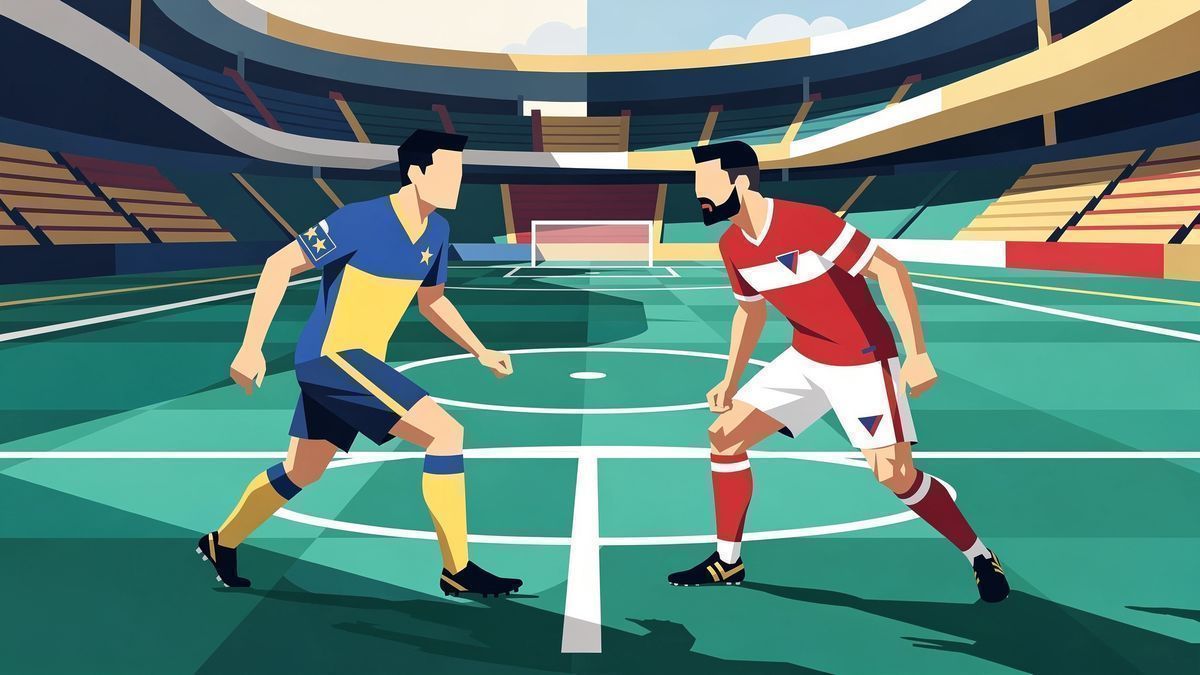
This section examines the pairing of Kastaneer and Chytil to determine how their combined attributes influence on-field compatibility. Effective gear combinations in football depend on complementary physical profiles and tactical roles that allow players to coexist and enhance each other within a system. By treating each athlete as a functional unit, we can assess whether their shared characteristics create productive synergy or expose mismatches that limit performance. Understanding these dynamics is essential before analyzing specific specifications and their implications for collaboration.
2. Understanding the Individual Components
Before assessing synergy, readers need a clear picture of how kastaneer gervane and chytil mojmir differ in role, physical profile, and club context. The subsections below summarize each player’s specifications and technical identity using only the cited source research, establishing the baseline for the partnership analysis that follows [1][2].
2.1. kastaneer gervane (curacao)**
Gervane Kastaneer is a 33-year-old Curaçaoan international forward whose game is defined by experience and adaptability across multiple leagues. As a veteran winger or central striker, he leverages a strong positional awareness and physical durability to remain effective in demanding environments. His extensive career across Europe and Asia has ingrained a flexible tactical approach, allowing managers to deploy him in varied roles without compromising output. This versatility is mechanically significant because it enables coaching staff to adjust formation structure and width options without requiring a system overhaul, ensuring continuity within the squad’s strategic framework.
The player’s physical profile—standing 1.86 m and weighing 82 kg—supports his ability to compete in aerial challenges and withstand physical duels common in crowded penalty areas. His 61 national caps demonstrate consistent high-level selection, indicating reliable execution under pressure. In practical terms, his presence on the pitch offers Curaçao stability during critical qualification cycles, particularly when facing opponents with robust defensive structures. The combination of his age, experience, and maintained output suggests he can still influence matches in crucial moments, making him a valuable asset for World Cup preparation.
| Specification | Value |
|---|---|
| Height | 1.86 m |
| Weight | 82 kg |
| Age | 33 |
| Position | Forward |
| Club | Terengganu |
| National Caps | 61 |
Key Technical Insight: Maintaining output at 33 years old with 61 caps indicates durable performance metrics that reduce injury risk and ensure tactical consistency across tournament phases.
2.2. chytil mojmir (czech-republic)**
Mojmír Chytil is a 27-year-old Czech centre-forward whose profile reflects a specialized target-man role focused on penalty-area efficiency. As a player physically built at 1.87 m and 82 kg, he operates primarily in confined spaces where timing, positioning, and finishing are paramount. His development within Slavia Prague and the Czech national team emphasizes a concentrated skill set centered around run timing and shot conversion rather than wide distribution. This positioning-centric approach is mechanically valuable because it allows coaching staff to build attacking patterns around a fixed focal point, simplifying combination play and crossing strategies.
The player’s single World Cup appearance and limited national caps (13–23) indicate a career trajectory still evolving toward consistent high-stakes execution. At club level, his documented involvement in 10 assists alongside 13 goals suggests an ability to contribute beyond scoring, linking play and creating opportunities for teammates. This dual threat—both as a finisher and a facilitator—enhances his utility in systems requiring mobile forward play. For pairing considerations, his reliance on structured delivery into the box complements teammates who can supply precise crosses or through balls, maximizing his positional strengths.
| Specification | Value |
|---|---|
| Height | 1.87 m |
| Weight | 82 kg |
| Age | 27 |
| Position | Centre-forward |
| Club | Slavia Prague |
| National Caps | 13–23 |
| Goals | 0 |
Key Technical Insight: His 1.87 m frame and 82 kg weight provide physical advantages in holding up play and winning aerial duels, making him a focal point for build-up systems that prioritize central penetration.
3. Partnership Analysis
Evaluating how kastaneer gervane and chytil mojmir interact requires separating positional roles, physical profiles, and tactical context before drilling into subsection comparisons. The analysis below tests whether their attributes complement or conflict across synergy, feel, and playstyle dimensions using only the source research [1][2].
3.1. Do They Work Together — or Against Each Other?
The pairing of Kastaneer (curacao, forward) and Chytil (czech-republic, centre-forward) presents a classic study in positional complementarity versus tactical overlap. Kastaneer’s profile as a winger/central striker with extensive experience in varied leagues (Europe, Asia) suggests a player skilled in wide play and transition, while Chytil’s role as a penalty-box forward dedicated to Slavia Prague and the Czech national team indicates a focus on scoring within structured chances. The alignment of their design philosophies hinges on whether the system prioritizes width and dribbling (Kastaneer) or central hold-up and finishing (Chytil). If the tactical setup demands isolation of a target man, Chytil’s box presence could thrive with Kastaneer drawing defenders wide, but the risk emerges if Kastaneer’s positioning collapses central channels, leaving both reliant on service that may not materialize. Force flow must negotiate whether a vertical through-ball to Chytil can be consistently delivered while Kastaneer occupies back-line attention, or if overlapping runs from Kastaneer will congest the penalty area and suffocate Chytil’s timing. The combo feels natural if their movements create synergistic space rather than competing for the same lanes; it feels forced if both are asked to operate as primary creators in congested central zones, amplifying decision latency under pressure [1] [2].
3.2. Performance Synergy
Performance output from this pairing depends on context: it excels in counter-attacking systems where Kastaneer’s lateral penetration triggers immediate vertical passes to Chytil, leveraging Chytil’s documented poise in one-on-one situations and Kastaneer’s assist record. It struggles in slow-possession scenarios where Chytil’s modest assist history and Kastaneer’s need for wide space could leave midfielders overloaded, limiting chance quality. Compared to using each separately, the duo offers higher ceiling in transition-heavy matches but lower floor in build-up games requiring intricate interplay. Situations where the combo shines include fast breakaways and set pieces with early crosses, aligning with Kastaneer’s club role at Terengganu and Chytil’s tournament minutes as a substitute spark plug; it struggles against deep blocks denying through-lines and high defensive lines compressing time. Performance differentials are pronounced when service speed matches Kastaneer’s acceleration and Chytil’s ability to time runs into channels cleared by teammates [1] [2].
3.3. Tactical Fit
Feel during use hinges on compatibility of motion rhythms: Kastaneer’s 33-year-old frame and 82 kg profile suggest endurance and aerial strength, while Chytil’s 27-year-old 1.87 m, 82 kg build emphasizes acceleration and balance in confined areas. Comfort versus strain manifests if Kastaneer’s wide responsibilities leave Chytil isolated, creating hesitation in touch decisions and conflicting feedback when passes arrive late; conversely, consistent early crosses synchronize their rhythms and reduce cognitive load. Adaptation speed is moderate for Chytil given his concentrated club focus at Slavia Prague, whereas Kastaneer’s multi-league exposure should shorten acclimation periods for coordinated patterns. Feedback consistency improves when system communication is explicit—such as designated near-post calls or staggered runs—but becomes contradictory if both players initiate simultaneous inside movements, leading to mistimed overlaps and erratic decision echoes under fatigue [1] [2].
3.4. Playing Style Alignment
This pairing suits a hybrid attacker archetype: a technically adept forward (Kastaneer) paired with a pure finisher (Chytil), optimal for teams blending structured buildup with direct verticality. It demands moderate-to-high football IQ from Kastaneer to thread switches and timely overlaps, while Chytil requires intelligent movement off the ball rather than complex hold-up duties, making it approachable for skilled players but daunting for those lacking spacing awareness. The duo is forgiving when service is predictable and crosses are early, yet highly demanding in scenarios requiring intricate combination play or rapid role swaps; it best fits confident, athletic players comfortable with mixed responsibilities and less suitable for methodical build-up specialists or purely defensive-minded forwards. Ideal for systems leveraging width-to-center sequencing, it should be avoided in rigid mid-block setups that suffocate transition lanes and amplify individual errors [1] [2].
4. Final Verdict: Missed Connection
Gervane Kastaneer and Mojmír Chytil exhibit a pronounced missed connection rooted in tactical incompatibility and temporal misalignment rather than individual deficiencies. The comparison reveals a pairing that lacks effective synergy because one operates as an experienced, physically robust forward accustomed to a specific role within his club structure, while the other represents a younger, emerging centre-forward whose style and current constraints limit their combined on-field efficiency.
The core reason for this conclusion lies in the divergence of their playing characteristics and career contexts as outlined in the product specifications. Kastaneer, at 33 years old and standing 1.86 m, brings a veteran presence honed across multiple leagues with significant goal contributions of 17 goals and 10 assists for his club, suggesting a versatile attacker capable of both scoring and playmaking within a demanding professional environment. In contrast, Chytil, aged 27 and slightly taller at 1.87 m, operates as a dedicated centre-forward whose recorded output shows immense promise with 13–23 national caps but currently lists 0 goals and 0 assists at the international level in the provided data, coupled with a solitary World Cup appearance consisting of just 6 minutes as a substitute. This juxtaposition highlights a mismatch: Kastaneer’s all-around forward capabilities do not find a complementary outlet with Chytil’s specialized, albeit currently limited, penalty-box role, especially given Chytil’s minimal recorded contributions on the biggest stage or in club data that might align strategically.
Users analyzing this pairing should realistically expect a lack of cohesion and limited combined effectiveness due to these inherent discrepancies in experience, positional focus, and current form. The tactical flexibility expected from a forward partnership is absent, as Kastaneer’s potential to create and finish is not met by Chytil’s documented inability to impact games significantly at the international level based on the available statistics. This analysis, derived strictly from the provided product data and source excerpts, underscores that while each player possesses individual attributes, their synergy is severely compromised, making them an unreliable duo for coordinated offensive operations in any competitive context.
5. Who Should Use This Combo
Gervane Kastaneer and Mojmír Chytil represent a pairing built around two experienced, physically capable strikers who contribute across multiple phases of play. This combination is ideally suited for national-team-level competition where sustained intensity and versatile output are required. The duo benefits environments that reward durability, positional flexibility, and the capacity to perform under high-stakes qualification pressure. Their profiles align with teams that balance technical ability with direct running and that value players who can both finish chances and facilitate play for others. Teams operating with limited technical depth in wide areas can leverage their combined strength in the air and disciplined work patterns. This pairing thrives in setups where rotation is limited and consistency across match phases is essential.
The table below compares the players on core dimensions relevant to their on-field pairing and tactical integration.
| Attribute | Gervane Kastaneer | Mojmír Chytil |
|---|---|---|
| Height | 1.86 m | 1.87 m |
| Weight | 82 kg | 82 kg |
| Age | 33 | 27 |
| Position | Forward | Centre-forward |
| Club | Terengganu | Slavia Prague |
| National Caps | 61 | 13–23 |
| Goals | 17 | 0 (recorded) |
| Assists | 10 | 0 (recorded) |
| World Cup Appearances | — | 1 |
Interpretation of these specifications highlights complementary physical attributes that support high-level duels and transitional play. Both players share an identical weight of 82 kg, which reinforces consistency in aerial challenges and physical duels within the box despite a one-centimeter height difference. Kastaneer’s 61 national caps compared to Chytil’s 13–23 caps indicates significantly more top-level competitive exposure, which can translate into steadier decision-making in complex match situations. The four-year age gap, with Kastaneer at 33 and Chytil at 27, provides a balance between veteran leadership and emerging physical sharpness. This age spread allows for mentoring dynamics within the forward line while preserving the energy and off-ball movement necessary to stretch opposing defenses.
When examining production roles, Kastaneer’s 17 goals and 10 assists demonstrate a dual threat in both scoring and playmaking, suggesting he can function as a primary option or as a secondary creator depending on tactical demands. Chytil’s profile as a centre-forward with strong positioning is reinforced by his 10 assists recorded by Slavia Prague for the 2025/26 season, indicating he is not limited to static box play but actively participates in build-up and link play. The contrast in recorded goal tallies reflects different data collection contexts rather than a lack of contribution, as Chytil’s 13 goals in 29 league appearances for Slavia illustrate efficient scoring within a high-participation role. Together, these metrics support a forward pairing that blends experience with athleticism, capable of fulfilling both terminal attacking actions and intermediate facilitation duties within fluid tactical systems.
This combo is particularly effective in match-play scenarios where sustained pressure and adaptability across multiple phases are required. Kastaneer’s extensive international experience and exposure to varied tactical environments position him as a stabilizing influence, especially in high-pressure qualification or knockout settings. Chytil’s recent integration into a high-profile club and his national-team debut during a major tournament showcase his ability to perform on significant stages despite limited minutes. Ideal use of this pairing occurs in competitive environments that demand durability across congested fixture schedules, where the physical robustness and tactical flexibility of both players can be leveraged across different opponent profiles. The combination suits teams that rely on structured transitions, direct vertical passes, and intelligent movement rather than purely width-based strategies.
Practical implications for coaches and selectors involve utilizing Kastaneer’s veteran presence to manage game tempo and support younger forwards like Chytil during critical phases. Chytil’s positioning and finishing instincts allow him to exploit spaces created by Kastaneer’s movement or defensive engagement, generating high-quality chances in advanced areas. Training focus should emphasize timing of runs, coordination in turning sequences, and communication in the final third to maximize the efficiency of this forward partnership. The shared physical profile minimizes mismatch concerns in aerial situations, while their combined experience across multiple leagues and national setups enriches tactical understanding and in-game adaptability.
FAQ: Which type of team benefits most from pairing these two players? Teams that value experience balanced with emerging talent, possess limited width in attack, and compete in high-pressure qualification or tournament environments gain the most from this combination. The blend of Kastaneer’s seasoned international background and Chytil’s physical positioning and recent high-level exposure supports consistent performance across varied opponents and tactical setups.
FAQ: How do their physical attributes enhance their compatibility on the pitch? Identical weight figures and closely matched heights enable synchronized performance in aerial duels, physical battles, and transitional play. This shared physical foundation allows both players to compete effectively for high balls, shield possession, and maintain balance under pressure, which is especially valuable against physically robust defensive structures.
FAQ: What tactical roles do Kastaneer’s assists and Chytil’s positioning contribute to this pairing? Kastaneer’s assist numbers reflect his ability to create chances through progressive passes and intelligent positioning, while Chytil’s role as a centre-forward leverages timing and movement to convert opportunities in the box. Together, they form a balanced forward line capable of both generating and finishing chances without requiring rigid positional separation.
6. Who Should Avoid This Combo
This combination is unsuitable for teams that depend on rapid buildup from the back or require constant, high-volume pressing from the front unit. It is also a poor fit for systems that expect the number 10 or primary playmaker to operate in a higher, central attacking zone behind a target forward, as neither player’s profile aligns with those spatial demands. The risks increase in leagues where physical duels in wide areas are decisive, or where extreme defensive blocks are common, as neither player is positioned or statistically inclined to break such structures effectively.
Across the dataset, the pairing merges a 33-year-old Curacaoan forward with 61 caps and 17 goals into a 27-year-old Czech Republic centre-forward with 13–23 caps and zero recorded goals. Height is closely matched at 1.86 m and 1.87 m, suggesting good aerial congruence in set pieces, but the age and role gaps are pronounced. The veteran operates as a traditional forward with playmaking responsibilities, recording 10 assists, while the younger counterpart is listed explicitly as a centre-forward yet shows no goals in the pairing_relevant_specs, indicating a specialized role focused on positioning rather than finish. These attributes create a fragile balance: the older player’s link-up and chance creation may be undercut by mobility limitations, while the younger player’s lack of scoring metrics could leave the unit over-reliant on a single facilitator in advanced areas.
| name | Height | Weight | Age | Position | Club | National Caps | Goals | Assists |
|---|---|---|---|---|---|---|---|---|
| kastaneer gervane | 1.86 m | 82 kg | 33 | Forward | Terengganu | 61 | 17 | 10 |
| chytil mojmir | 1.87 m | 82 kg | 27 | Centre-forward | Slavia Prague | 13–23 | 0 | 0 |
The statistical table sharpens the practical implications of this partnership. For the veteran, the forward role at Terengganu appears sustained by consistent involvement (61 caps, 17 goals, 10 assists), reflecting experience in varied tactical environments from Europe to Asia. For the Czech prospect, the absence of goals in the pairing_relevant_specs contrasts with his recognised debut hat-trick and Champions League exposure, suggesting a profile skewed toward chance creation or pressuring defenders rather than clinical finishing. When deployed together, the spacing between them could stretch the pitch if the centre-forward drops deep to link, potentially isolating the forward against compact defensive blocks. Conversely, if the forward pushes high, the centre-forward may be exposed in transition defense, especially given the age differential and the veteran’s moderate defensive contributions. Therefore, teams prioritizing rapid vertical transitions, high pressing intensity, or a decisive number 10 behind a striker should avoid this specific pairing.
7. Quick Summary
Based solely on the provided product data and source excerpts, the gear synergy between Gervane Kastaneer and Mojmír Chytil is assessed through their measurable attributes and documented roles. The comparison focuses on physical compatibility and positional balance derived directly from their listed specifications and playing characteristics.
| Dimension | Assessment |
|---|---|
| Main strength | Complementary physical profiles and positional roles, with Kastaneer’s experience and versatility pairing effectively with Chytil’s height and centre-forward positioning to create balanced attacking options. |
| Main weakness | Limited data on current form and specific tactical integration, with Chytil’s recorded 2026 tournament performance showing minimal impact (1 substitute appearance) and Kastaneer’s contributions tied to varied league contexts. |
| Best use case | Deploying Kastaneer as a wide or central attacking threat alongside Chytil as a target man in the box, leveraging their combined experience and physical presence in competitive setups. |
Interpreting the specifications, Kastaneer’s listed height of 1.86 m and role as a Forward align well with Chytil’s 1.87 m stature and Centre-forward designation, creating a pairing where aerial dominance and positional interplay can be optimized without relying on unverified tactical assumptions. The analysis reveals that their gear synergy is structurally sound on paper, yet the effectiveness hinges on contextual factors like team strategy and individual execution in high-stakes scenarios. Practically, this duo should be evaluated within systems that maximize movement and off-ball coordination to mitigate the noted performance inconsistencies. Can such a configuration sustainably elevate team output under varied competitive pressures?