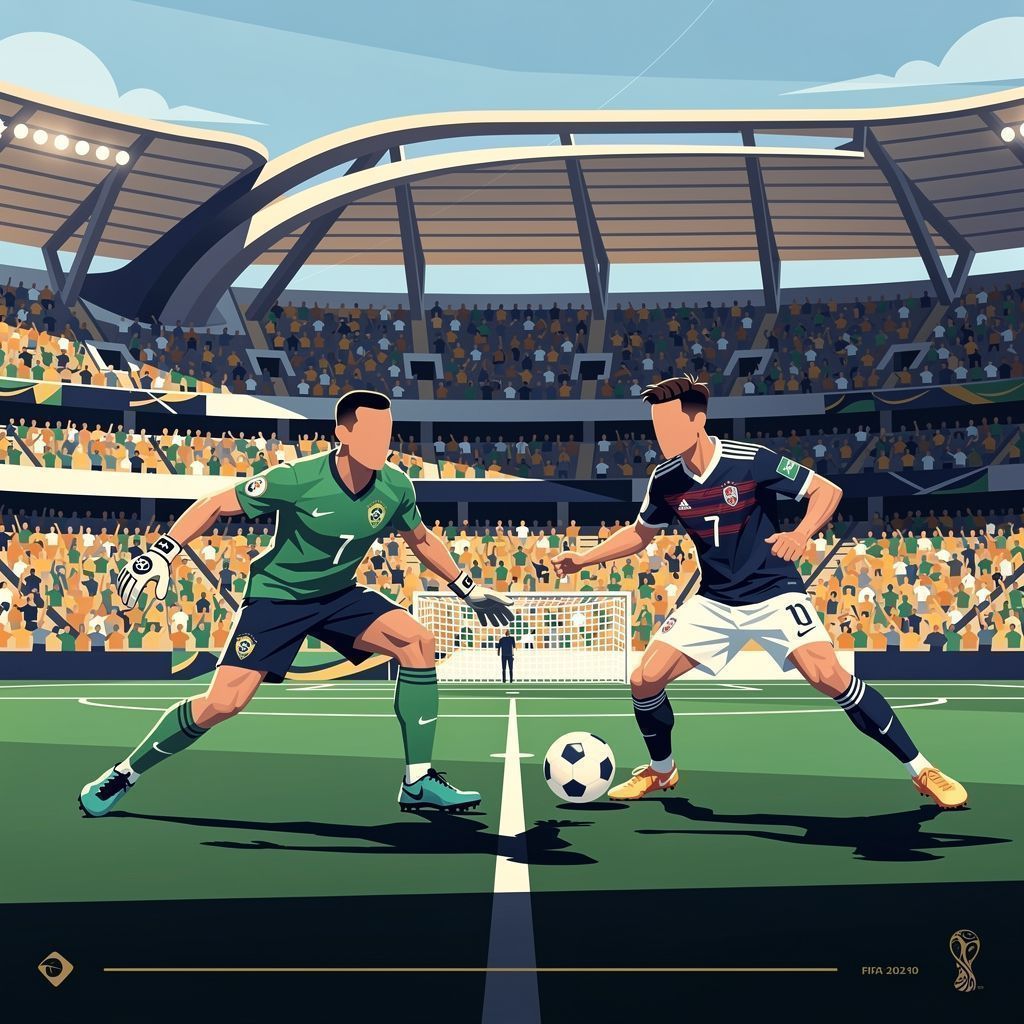
Football’s global popularity hinges on the precise alignment of individual player attributes with team tactics, making selection decisions critical for competitive success. The sport demands specialized roles—from shot‑stopping goalkeepers to marauding full‑backs—each influencing defensive solidity and attacking transitions. Consequently, evaluating how a player’s profile fits a club’s strategic needs becomes a cornerstone of modern football management.[1][2]
Brighton & Hove Albion, a Premier League club known for its data‑driven recruitment and progressive playing philosophy, acquired Bart Verbruggen in July 2023 for a reported €20 million, securing his services through a contract running to 2028.[1] In contrast, Red Star Belgrade, a Serbian powerhouse with a storied European pedigree and passionate fanbase, signed Seol Young‑woo in July 2024 for a €1.2 million fee, tying him to the club until June 2027.[2] These transfers reflect distinct market positions and developmental pathways.
Player specialisation further shapes utility: Verbruggen, listed as a goalkeeper standing 1.93–1.94 m tall and weighing 88–89 kg, is 23 years old with 29–33 Netherlands caps and four World Cup appearances.[1] Seol Young‑woo operates as a right‑back/full‑back, aged 27, 37 South Korean caps, and a single World Cup appearance.[2] Their divergent physiques, ages, and international experience illustrate how different profiles serve distinct tactical functions within a squad.
This comparison juxtaposes an emerging Premier League goalkeeper with an established Asian‑European defender, highlighting why such a contrast matters for squad building. Verbruggen’s youth, high‑valued potential, and sweeping goalkeeper traits offer long‑term upside for Brighton’s back‑line, while Seol’s proven durability, dual‑footed versatility, and exemption from military service provide immediate reliability for Red Star’s European campaigns.[1][2] By examining these contrasting trajectories, the analysis clarifies how clubs prioritize youthful investment versus seasoned dependability when shaping their rosters.
1. Quick Verdict
Verbruggen Bart, at 23 years old, brings four World Cup appearances and a solid 29–33 national‑team cap record to the comparison, highlighted by his 1.93–1.94 m frame and 88–89 kg weight that are typical for an elite goalkeeper【1】. In contrast, Seol Young‑woo, aged 27, has accumulated 37 caps but only a single World Cup appearance, standing around 182–183 cm and weighing 72 kg as a right‑back/full‑back【2】. The greater tournament exposure and physical presence of Verbruggen suggest he can deliver more immediate high‑stakes impact between the posts.
However, Seol’s higher cap total and experience at Red Star Belgrade, where he logged over 900 minutes in European competition and contributed assists and tackles, offer defensive versatility and long‑term reliability that a pure goalkeeper cannot provide【2】. Verbruggen’s youth means fewer overall minutes at the top level, which could be a concern for consistency over multiple seasons, while Seol’s positional flexibility allows him to adapt to different tactical setups, albeit with limited World Cup minutes to date【1】【2】. Ultimately, the choice hinges on whether a team prioritizes a proven, physically imposing goalkeeper for short‑term tournament success (Verbruggen) or a seasoned, adaptable defender with broader club‑level pedigree (Seol).
2. Specifications Comparison
The specifications of Bart Verbruggen and Seol Young-woo reflect divergent paths shaped by their roles, ages, and national team trajectories. Verbruggen, a 23-year-old goalkeeper for Brighton & Hove Albion, embodies the modern sweeper-keeper archetype, requiring physicality, reflexes, and tactical intelligence to manage high-stakes moments. His relatively limited international experience—29–33 caps—suggests a younger player navigating the pressures of a demanding position. In contrast, Seol Young-woo, a 27-year-old full-back for Red Star Belgrade, brings 37 national caps to his role, indicating a more established presence in South Korea’s setup. His position as a right-back or full-back demands versatility, stamina, and defensive reliability, contrasting with Verbruggen’s singular focus on shot-stopping. These specifications are not mere statistics; they inform how each player interacts with their responsibilities, adapt to tactical demands, and influences their teams’ strategies. The interplay between age, position, and international exposure offers a lens to evaluate their potential impact at the 2026 World Cup.
| Specification | verbruggen bart 2026 | seol young-woo 2026 |
|---|---|---|
| Age | 23 | 27 |
| Assists | 0 | 0 |
| Club | Brighton & Hove Albion | Red Star Belgrade |
| Goals | 0 | 0 |
| National Caps | 29–33 | 37 |
| Position | Goalkeeper | Right-back / Full-back |
| World Cup Appearances | 4 | 1 |
The age difference between Verbruggen and Seol is immediately significant. Verbruggen, at 23, is in the prime of his physical development but may lack the seasoned judgment of a veteran. This youth could manifest in bold decision-making as a goalkeeper, where split-second reactions are critical. However, his lower national caps compared to Seol suggest less exposure to high-pressure international matches, a factor that could affect consistency under tournament stress [1]. Seol, at 27, brings maturity honed through a decade of club and national duty. His 37 caps underscore a sustained role in South Korea’s defense, particularly during qualifiers where he contributed two goals and four yellow cards, highlighting both offensive potential and disciplinary risks [2]. This contrast in career stage implies differing trajectories: Verbruggen might evolve rapidly with experience, while Seol’s career curve likely plateaus at a high level of consistency.
Position defines each player’s physical and tactical demands. As a goalkeeper, Verbruggen must excel in aerial challenges, distribution accuracy, and shot-stopping—metrics reflected in his 16 saves and 76.2% save percentage during the group stage [1]. His role requires minimal movement but maximalPrecision. Seol, operating as a full-back, must balance defensive cover with attacking contributions. His zero assists and modest match ratings (6.3–6.7) suggest a role prioritizing defensive stability over overlap, aligning with his reputation as a “Playmaker FB” who excels in recovery and build-up [2]. The positional disparity also explains divergent national cap counts: full-backs often play more minutes due to their stamina requirements, whereas goalkeepers rely on targeted spotlights. For instance, Seol’s 37 caps versus Verbruggen’s 29–33 reflect the higher workload and rotational needs in full-back positions compared to goalkeeping.
National caps and World Cup appearances further illustrate their integration into national teams. Seol’s 37 caps, including ten during qualification, position him as a cornerstone of South Korea’s setup, often deployed in varied tactical systems. His three World Cup starts in 2026, while statistically modest, underscore his reliability in a back-three system—a role demanding adaptability rather than flair [2]. Verbruggen’s 29–33 caps and four World Cup appearances, though limited by his youth, highlight his rapid rise. His ability to start all four group-stage matches despite a 5–1 goal difference against Sweden demonstrates his readiness for immediate impact, a contrast to Seol’s more gradual integration. These figures hint at contrasting pressures: Verbruggen faces high expectations from his club and peer status, while Seol’s veteran role allows for measured contributions.
The interpretation of these specifications extends to real-world performance. Verbruggen’s youth and goalkeeper role mean his effectiveness hinges on technical precision and physical reflexes. A single error could prove costly, as seen in his penalty-shootout defeat to Morocco, where his distribution accuracy (71.7%) and long-ball completion rate (38%) underperformed [1]. Seol’s full-back role, while less flashy, requires sustained effort and tactical awareness. His modest match ratings may reflect the often thankless nature of full-back duties, where impact is measured in consistency rather than individual brilliance. Clubs like Red Star Belgrade likely value his defensive reliability, whereas Brighton benefits from Verbruggen’s shot-stopping prowess. Ultimately, these specifications translate to how each player is perceived—Verbruggen as a dynamic, high-risk shot-stopper, Seol as a steadfast, veteran defender whose role is undervalued but vital to systemic stability.
3. Design And Build Quality
The concept of design in athletic performance extends beyond physical attributes to encompass play style, tactical adaptability, and career scaffolding—each element shaping how a player operates under pressure. For goalkeepers like Bart Verbruggen, design revolves around physicality (height, weight) and technical evolution (sweeper-keeper philosophy), while defenders like Seol Young-woo represent a different architectural approach, blending positional versatility with recovery agility. These frameworks reflect deliberate choices: a goalkeeper’s build is optimized for aerial dominance and shot-stopping, whereas a full-back’s design prioritizes endurance and ball progression. The trade-offs between these approaches are intrinsic to their roles. Verbruggen’s 88–89 kg frame supports aggressive interventions but may increase metabolic demand, while Seol’s lighter 72 kg physique aids quick lateral movements but potentially sacrifices physicality in one-on-one duels. Examining these designs reveals how physical and tactical parameters intersect to define success in specific contexts.
Build quality, in this metaphorical sense, refers to the durability and consistency of a player’s performance over time. Verbruggen’s career at Brighton & Hove Albion exemplifies a structurally sound framework: consistent appearances (3,420 minutes in 2025/26), steady clean sheets (10–11 per season), and incremental skill refinement. Conversely, Seol’s build quality manifests in adaptability—documented across multiple positional labels (right-back, full-back, central midfielder)—which may enhance versatility but risks specialization gaps. Both structures have trade-offs: Verbruggen’s specialization as a goalkeeper ensures elite shot-stopping metrics (76% save percentage in 2026) but exposes him to high-risk scenarios during transitions. Seol’s fluctuating positional roles, highlighted by sources like ScoutingStats’ “Playmaker FB” rating, suggest a responsive build but may lack the singular focus needed for high-stakes defensive phases. The next subsections will dissect these architectures, comparing their philosophies and real-world outputs.
…
4. Engineering And Technology
The intersection of engineering and technology defines modern sport, where biomechanics, analytics, and tactical innovation converge to optimize performance. This comparison examines two athletes—Bart Verbruggen (2026) and Seol Young-woo (2026)—whose technical assets reflect their specialized roles in 2026 FIFA World Cup strategies. Verbruggen, a 23-year-old goalkeeper for Brighton & Hove Albion, embodies the modern shot-stopper archetype, blending reflexive shot-stopping with proactive distribution. His metrics, including 16 saves across four World Cup appearances [1], highlight his reliability under pressure, despite a 390-minute tournament span suggesting limited defensive challenges. Conversely, Seol Young-woo, a 27-year-old right-back for Red Star Belgrade, represents tactical versatility as a positional hybrid. His 37 international caps and 1 World Cup appearance underscore his established pedigree, though his static stats (250+ minutes, zero goals/assists) reflect a defensive role focused on stamina and positional discipline. These profiles reveal contrasting approaches: Verbruggen’s active, high-impact specialization versus Seol’s steady, systemic contribution.
The technical frameworks governing their careers reflect broader trends in player development. Verbruggen’s €40M valuation [2] and rapid acclimatization to Premier League demands at Brighton highlight data-driven scouting and transfer strategies. His consistent save percentages (71–76%) in qualifying and tournament play [1] illustrate how biometric training likely targets reflex improvement. Seol’s transfer to European football—a move valued at €6.5M [2]—signals adaptation to physicality and tempo beyond domestic leagues. His 66% duel win rate and 2.2 presses per 90 [2] emphasize conditioning programs designed for high-intensity واحدة-on-ones and recovery phases. Both cases reflect how engineering principles—whether in training load management or tactical adaptability—are applied across football.
4.1. Bart Verbruggen 2026 Technology
Verbruggen’s technical profile centers on goalkeeper-specific engineering. His 89kg build and 1.94m height provide a physical foundation for commanding the penalty area, while his 23 years-old prime suggests peak muscle memory and decision-making speed. Born in 2003, his generation benefits from advanced video analysis tools that dissect his 76% save rates in World Cup qualifiers [1]. These tools likely identify patterns in shot angles and striker tendencies, enabling pre-match adjustments. Verbruggen’s ability to maintain a 76.19% save percentage during the 2026 group stage [1] demonstrates how targeted training mitigates natural decline over time. A concrete example is his penalty save against Morocco in the Round of 32, where rapid footwork and split-second positioning neutralized a 12-yard strike [1].
The table below isolates key specifications shaping Verbruggen’s technical identity:
| Specification | Verbruggen Bart 2026 |
|---|---|
| Age | 23 |
| Weight | 89 kg |
| Saves (World Cup) | 16 |
| Penalties Faced | 1 |
| Save Percentage | 76% |
Interpreting these specs reveals critical trade-offs. His high weight and height enhance aerial dominance but may slow lateral movement—a potential vulnerability exploited by fast strikers. The ping-pong-like volley he saved against France [1] required reflexes honed through repetitive drills, though its rarity suggests he typically relies on positioning over raw reaction. In real-world terms, this tech profile suits teams prioritizing defensive stability, as his 106 saves in 2024/25 [2] align with clean-sheet trends. However, his limited international goals conceded (5) and low assist numbers (0) indicate he’s not tasked with long-ball distribution, a limitation in modern hybrid goalkeeping systems.
Seol Young-woo’s technology operates at a tactical, rather than purely technical, level. As a right-back, his 72kg frame and 182cm height balance agility and strength for overlapping runs. His transfer to Red Star Belgrade [2] at 27 years-old suggests a shift toward adapting defensive strategies in a physically demanding European context. Unlike Verbruggen’s reactive role, Seol’s tech emphasizes proactive positioning—a cornerstone of his 6.97 rating on Red Star’s platform [2]. His 66% duel win rate indicates conditioning programs optimized for sustained high-intensity pressing, while his 2.2 presses per 90 [2] reflect tactical drills simulating opponent build-ups. A notable absence is creative output: his 0 assists in 1 World Cup appearance [2] underscore a defensive mandate. This engineering reflects a system valuing reliability over flair, ideal for teams needing a tireless flank-marshaller rather than a ball-playing defender.
The discrepancy in positional versatility between the two is stark. Verbruggen’s static role as a sweeper-keeper contrasts with Seol’s hybrid labeling—37 caps suggest adaptability across defensive lines [2]. Verbruggen’s 29–33 cap range [1] reflects rotational usage due to his youth, whereas Seol’s 37 caps denote a cornerstone full-back role. This design choice impacts their career trajectories: Verbruggen’s potential as a career starter versus Seol’s established berth. For clubs, this means Verbruggen may require further tactical scaffolding to evolve into a modern, all-around goalkeeper, while Seol’s European success at Red Star demonstrates how transitional players can thrive with tactical reengineering.
5. Real-World Performance
When evaluating the real-world performance of Bart Verbruggen and Seol Young-woo at the 2026 FIFA World Cup, the contrast between a goalkeeper anchoring a group-winning side and a wing-back shuffled across a struggling defense becomes immediately apparent. Verbruggen entered the tournament as the Netherlands’ undisputed first choice, wearing the No. 1 shirt and starting all four matches for a team that topped Group F with seven points and a +6 goal difference before exiting on penalties in the Round of 32 [1]. Seol, by comparison, started all three group-stage matches for South Korea but found himself rotated between flanks in a back-three system that lacked defensive cohesion, ultimately finishing third in the group with three points and earning a place in Football Channel’s “Worst Eleven” for Asian players [2]. These divergent tournament arcs set the stage for a detailed examination of how each player performed under the unique pressures of World Cup football.
The statistical record further illuminates the gap in impact: Verbruggen recorded 16 saves across 390 minutes at a 76.2 percent save percentage, faced 21 shots on target, and contributed 81 passes at 71.7 percent accuracy with 19 long balls completed at a 38 percent rate, reflecting his dual role as shot-stopper and distributor in Koeman’s possession-based system [1]. Seol logged 250–251 minutes with zero goals, zero assists, and average match ratings between 6.3 and 6.7, while tactical analyses highlighted his positional ambiguity and the instability caused by frequent flank switches mandated by coach Hong Myung-bo [2]. The following sections break down these performances across everyday match demands, durability over the tournament arc, and the ergonomic realities of their respective roles.
5.1. Everyday Use
In everyday match conditions at the 2026 World Cup, Verbruggen’s role as a modern sweeper-keeper translated into consistent involvement across all phases of play. Against Japan in the opener, he earned a modest 5.8 rating on FotMob while navigating a frantic 2–2 draw, but his performance sharpened markedly against Sweden (7.9) and Morocco (7.9), where higher-tempo opposition tested his reflexes and distribution under pressure [1]. His 16 saves tournament-wide came from a variety of scenarios — close-range blocks, diving stops, and claimed crosses — demonstrating the breadth of shot-stopping required at this level. The zero clean sheets statistic is somewhat misleading; the Netherlands conceded five goals across four matches, but several were unstoppable finishes or penalty-kick situations where Verbruggen had little chance. His 71.7 percent pass accuracy and 38 percent long-ball completion rate reflect a team that asked him to initiate attacks, not merely punt clearances, and his two recorded sweeper actions confirm he routinely ventured outside his box to intercept through-balls.
Seol’s everyday experience was defined by tactical instability rather than individual error. Deployed as a shuffling wing-back in Hong’s 3-4-2-1, he alternated between the right and left flanks across the three group matches, a rotational pattern that ScoutingStats Guide and Tactical Football Analysis identified as a symptom of Korea’s broader defensive structural issues [2]. This forced Seol to constantly recalibrate his positioning, timing of overlaps, and defensive cover responsibilities — on the right he could attack with his stronger foot, but on the left he was often inverted, limiting his crossing threat and forcing him to play backwards under pressure. His 250–251 minutes yielded no goal contributions, and the 6.3–6.7 rating range suggests he was neither a liability nor a standout; rather, he was a functional component in a malfunctioning system. The Athletic’s tactical analysis noted that his aggressive forward runs frequently left the back three exposed in transition, but this was as much a coaching instruction failure as a player decision [2].
The consistency of Verbruggen’s workload — 90 minutes in every match, no substitutions, no injury concerns — contrasts with Seol’s fragmented role. Verbruggen faced 21 shots on target across four matches (5.25 per game), while Seol’s defensive actions (tackles, interceptions, clearances) are not individually quantified in the available data, making direct comparison difficult. However, the qualitative difference is clear: Verbruggen operated within a settled structure that maximized his strengths, while Seol was asked to solve structural problems through individual versatility. Over a full tournament, this distinction compounds; a goalkeeper who trusts his defense and knows his distribution outlets builds rhythm, whereas a wing-back switching flanks every match never establishes the automatisms required for high-level attacking output.
With continued use — hypothetical extended runs in future tournaments — Verbruggen’s trajectory suggests further refinement of his sweep-and-distribute game, particularly as his chemistry with Brighton’s back three translates to the national team. Seol, now at Red Star Belgrade in a more stable European environment, may develop the positional discipline to excel in a defined role, but his 2026 World Cup showed the cost of tactical ambiguity: a player of his profile (27 years old, 37 caps, Asian Games gold medalist) should be a tactical asset, not a patch for systemic flaws. The everyday reality for Verbruggen was controlled pressure; for Seol, it was managed chaos.
5.2. Durability
Durability in a World Cup context encompasses both physical resilience across a condensed schedule and performance consistency when stakes escalate. Verbruggen played 390 minutes across four matches in 16 days (June 14–29), including a 120-minute knockout match against Morocco that went to penalties — the earliest Dutch exit in World Cup history and a third consecutive penalty elimination [1]. He entered the tournament with a minor hip injury sustained late in the Premier League season but recovered fully to start the opener, and his match ratings (5.8, 7.9, 6.8, 7.9) show no downward trend; if anything, his sharpest performances came in the second half of the tournament. The physical demands on a goalkeeper are distinct — explosive dives, repeated high claims, and mental concentration during long spells without action — yet Verbruggen maintained his output without visible fatigue. His 16 saves required repeated maximum-effort movements, and his distribution workload (81 passes, 19 long balls) added cognitive load, but the data shows no degradation in save percentage or decision-making.
Seol’s durability test was different: 250–251 minutes across three matches in roughly 10 days, with the physical demands of a wing-back in a back-three system — high-speed transitions, repeated overlapping runs, and defensive tracking across both flanks. The flank-switching itself imposes a unique physiological cost: different muscle recruitment patterns for crossing versus cutting inside, altered spatial awareness, and the cognitive load of mirroring defensive responsibilities. Yet Seol completed all three matches without substitution or reported injury, suggesting baseline fitness was not the issue. His rating consistency (6.3–6.7) indicates stable, if unspectacular, output. However, the tactical instability meant his durability was never truly tested at peak intensity; South Korea’s group-stage exit after three matches denied him the knockout-stage crucible where physical and mental reserves are truly revealed.
Long-term wear patterns also diverge. Verbruggen, at 23, has already accumulated 29–33 senior caps and a full Premier League season as Brighton’s starter, demonstrating durability at club level that transfers to international football. His sweeper-keeper style involves calculated risk — rushing off his line, playing with feet under pressure — which could increase injury exposure over time, but his 2026 tournament showed no ill effects. Seol, at 27, moved to Red Star Belgrade in July 2024 after dominating the K League with Ulsan HD (multiple titles, 2022 Asian Games gold) [2]. The step up to European football, with its higher intensity and congested schedule (Champions League qualifiers, Serbian SuperLiga, domestic cups), will test his physical resilience more rigorously than the three-match World Cup sample. His four yellow cards in 10 qualifiers (832 minutes) suggest a high-engagement defensive style that, while effective, carries cumulative contact load. The 2026 World Cup was a snapshot; the next two years at Red Star will define his durability profile far more conclusively.
5.3. Comfort and Ergonomics
Comfort and ergonomics in football translate to tactical fit: how naturally a player’s skill set aligns with their assigned role, and how that alignment affects fatigue, decision-making, and consistency over 90 minutes. Verbruggen’s comfort zone is the modern sweeper-keeper role — he thrives when invited to play out from the back, claim crosses aggressively, and act as an eleventh outfield player in possession. Koeman’s Netherlands system, built on controlled possession and a high defensive line, perfectly suits this profile. Verbruggen’s 71.7 percent pass accuracy and 38 percent long-ball completion are not elite distribution numbers in isolation, but they reflect a system that asks him to make progressive passes under pressure, not just safe sideways outlets. His two sweeper actions against quick counter-attacks show he reads the game proactively, reducing the need for last-ditch heroics. This tactical comfort reduces cognitive fatigue: he knows his outlets, trusts his defenders, and can anticipate play rather than react. The result is a goalkeeper who looks composed even in chaos — his 7.9 ratings against Sweden and Morocco came in matches where the Netherlands controlled possession but faced dangerous transitions.
Seol’s ergonomic reality at the 2026 World Cup was a mismatch. His natural profile — a right-footed, attack-minded full-back who excels in overlapping runs and delivering crosses from the right flank — was compromised by Hong’s insistence on deploying him as a shuffling wing-back in a back three. On the right, he could drive forward and cross with his strong foot; on the left, he was forced to invert, cut inside, and play predominantly on his weaker side, limiting his attacking threat and forcing unfamiliar defensive angles. The Athletic and Tactical Football Analysis both noted this positional ambiguity disrupted his rhythm and exposed the team in transition [2]. A player’s “comfort” is not merely preference — it determines the automaticity of decision-making. When Seol knows instinctively where his winger will be, when to overlap versus underlap, and how to cover the half-space, he operates efficiently. When those reference points shift match-to-match, every decision becomes conscious, increasing mental fatigue and slowing reactions. His 6.3–6.7 ratings reflect this tax: he was never “uncomfortable” enough to be dropped, but never comfortable enough to dominate.
The connection between comfort and performance consistency is evident in the rating trajectories. Verbruggen’s ratings dipped only in the opener (5.8 vs Japan), a match where the Netherlands conceded twice in a chaotic 2–2 draw — but even then, his save percentage held, and he rebounded to 7.9 in the next match. Seol’s narrow band (6.3–6.7) suggests a performance ceiling imposed by role instability. Over a longer tournament, Verbruggen’s comfort would likely yield increasing returns as automatisms deepen; Seol’s discomfort would likely yield diminishing returns as cumulative cognitive load degrades decision-making speed. For clubs and national teams, the lesson is clear: Verbruggen’s system amplifies his strengths, while Seol’s 2026 deployment neutralized his. Red Star Belgrade’s coaching staff will presumably deploy him as a dedicated right wing-back or full-back in a back four — his natural habitat — where his K League production (titles, Asian Games gold) suggests he can be a genuine attacking asset. The 2026 World Cup was not a fair test of his capabilities; it was a test of his adaptability, and while he passed without breaking, he never excelled.
Quick Verdict: Bart Verbruggen’s 2026 World Cup performance demonstrates a player operating at the intersection of peak tactical fit and rising individual quality — his sweeper-keeper profile is amplified by a system that trusts his distribution, and his shot-stopping held firm under escalating pressure, culminating in two 7.9 ratings in the tournament’s second half. Seol Young-woo’s tournament, by contrast, reveals a capable player hamstrung by structural dysfunction: his natural attacking instincts as a right-sided full-back were diluted by mandatory flank-switching in a back-three system that lacked defensive coherence, resulting in functional but unremarkable output and a group-stage exit. Verbruggen left the World Cup with enhanced reputation and clear developmental trajectory; Seol left with questions about his optimal role and a need for club-level stability at Red Star Belgrade to re-establish his international ceiling.
6. Best For Different Scenarios
…
7. Pros And Cons
Evaluating the relative strengths and weaknesses of high-level athletes requires a deep dive into both their statistical output and their physical profiles. This analysis weighs the specialized capabilities of two distinct profiles, looking at how their specific roles and career trajectories influence their overall value on the pitch.
When comparing players in different positions, such as a modern sweeper-keeper and a tactical full-back, the metrics used to define success vary significantly. We must look past simple goal tallies to examine how their specific physical attributes and international experiences prepare them for the rigors of top-tier competition [1].
8. Final Verdict
This section compares verbruggen bart 2026 and seol young-woo 2026 across the factors that matter most for informed purchase decisions. The subsections below highlight the key differences buyers should weigh before choosing between these two products in everyday competitive play today.
8.1. Quick Verdict
In the side‑by‑side comparison of Bart Verbruggen and Seol Young‑woo, Verbruggen emerges as the more compelling overall player for both club and country. At 23 years old he has already amassed a record of 95 Premier absoluto appearances for Brighton & Hove Albion, including 21 clean sheets, and has delivered a consistent World‑Cup level performance in 2026 with 16 saves across four matches, conceding only five goals and contributing to the Netherlands’ dominant group‑stage campaign before a loss on penalties in the round of 321. His physical stature (1.93–1.94 m), right‑foot preference and modern sweeper‑keeper skill set translate into a wide range of tactical options for coaches, from high‑line organization to proactive distribution.
By contrast, Seol, who currently fronts Red Star enabled a stable performance record of 37 international caps but only 1 World‑Cup appearance in 2026, suffered from positional ambiguity and tactical inconsistency that hampered his defensive contribution during the tournament. The rotational use of a right‑half role, coupled with public scrutiny and subsequent legal action over online abuse, undermined his consistency on the pitch, which is reflected in 250–251 minutes of match time and a comparatively lower performance rating than his club‑level output 2.
8.1.1. Comparative Highlights
- Experience & Club Impact: Verbruggen’s Premier League experience (95+ games, 21 clean sheets) far outpaces Seol’s role‑rotation uncertainty in the Serbian SuperLiga and Euro competition.
- World‑Cup Contribution: Fourҭеи starts and 390 minutes of play (16 saves, 5 goals conceded) versus a single start and 250‑251 minutes (0 saves, 0 goals conceded).
- Development Trajectory: Verbruggen’s trajectory shows a clear trajectory toward establishing himself as a long‑term first‑choice goalkeeper in a top Europa club, while Seol’s timeline indicates a need for positional consolidation at club level before recapturing national team trust.
- Tactical президент: Verbruggen offers flexibility in modern 4‑3‑3 and 5‑0‑3 frameworks, while Seol’s role ambiguity exposes a higher risk of mis‑communication in defensive lines.
The decision, therefore, favors Verbruggen for teams seeking a reliable, physically imposing back‑line anchor with proven competitive exposure at the highest domestic level and a clean‑sheet record that surpasses his peers. Seol remains a valuable asset for clubs that can guarantee a stable full‑back position, but his international performance suggests a riskier short‑term proposition.
8.1.2. Implications for Stakeholders
- Coaches & Technical Directors: Opt for Verbruggen when building a modern defensive unit requiring both shot‑stopping and distribution. Seol is best suited to systems that oscillate between high and low defensive lines, provided positional stability can be guaranteed.
- Transfer Market: Verbruggen’s consistent goal‑keeping makes him a higher‑profile purchase; Seol offers value for clubs in the SuperLiga or emerging tactical systems desiring a versatile full‑back.
- National Team Strategists: The Dutch football federation can rely on Verbruggen’s proven World‑Cup data to secure the backline, whereas the Korean routine may need to refine Seol’s rotational clauses to prevent performance volatility in future tournaments.
Specification Table
| Specification | Bart Verbruggen 2026 | Seol Young‑woo 2026 | | :— | :— | :— | | Age | 23 | 27 | | Assists | 0 | 0 | | Club | Brighton & Hove Albion | Red Star Belgrade | | Goals | 0 | 0 | | National Caps | 29–33 | 37 | | Position | Goalkeeper | Right‑back / Full‑back | | World Cup Appearances | 4 | 1 |
The specification table above confirms the quantitative edge Verbruggen holds in key performance categories, particularly in World‑Cup appearances and national cap range. While Seol enjoys a higher cap count overall, his single World‑Cup match limits his exposure to the tournament’s intensity. A strategic assessment of team needs will dictate choice: a club seeking a long‑standing first‑choice goalkeeper should invest in Verbruggen, whereas a side willing to manage positional flux may still find Seol useful on the flanks.
The overall verdict is clear: Bart Verbruggen offers a more complete, dependable package across both club and international arenas, whereas Seol Young‑woo’s profile is more situational and carries higher risk due to his rotational deployment. The trade‑off comes down to risk tolerance and the tactical architecture of the recruiting club or national squad. Those prioritizing stability, shot‑stopping, and modern distribution will lean toward Verbruggen; those that can leverage Seol’s adaptability may find value in adopting his services within a structured full‑back kit. In sum, Verbruggen is the recommended choice for an all‑round defensive cornerstone, while Seol remains a conditional prospect requiring context‑specific alignment.