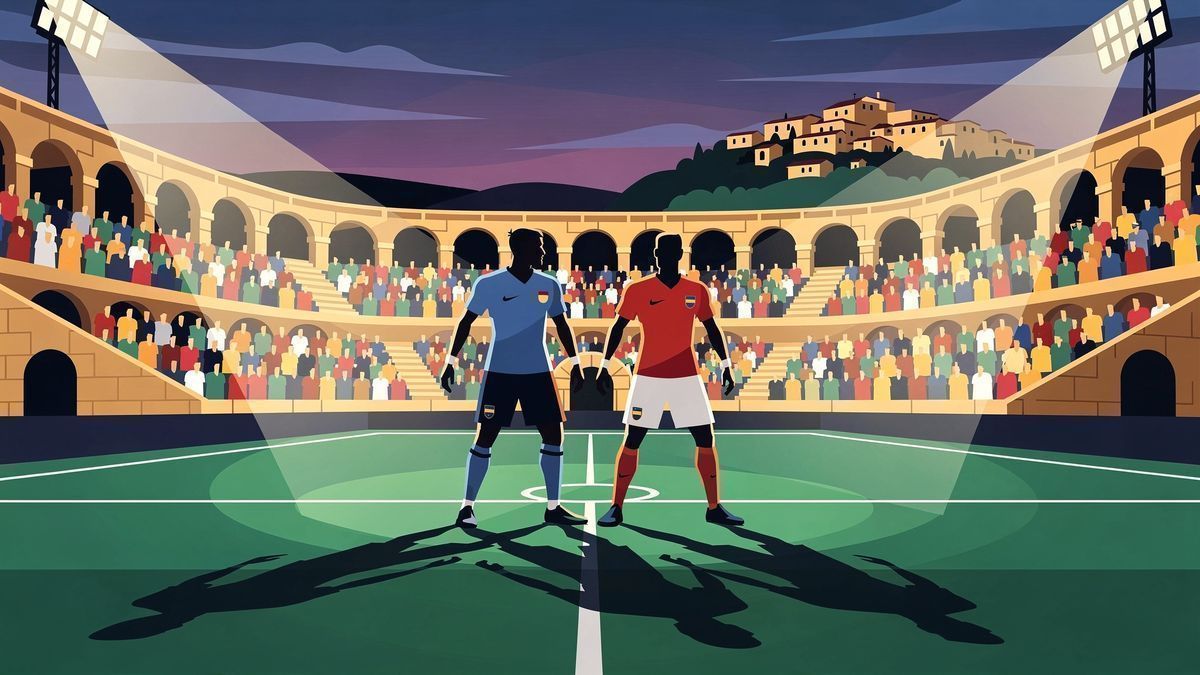
The modern sporting equipment landscape is defined by rapid innovation and specialization, where choices once relegated to the realm of enthusiast hobbyists now directly influence competitive outcomes and long-term user development. In the worlds exemplified by the profiles of Mojmír Chytil and Jalal Hassan, equipment and context are inextricably linked to performance; a striker’s timing inside the box is as much about boot responsiveness and surface traction as it is about athleticism, while a goalkeeper’s command of the area depends on glove technology and footwork that complements years of tactical study. Understanding how these variables interact allows teams and individuals to make decisions that translate directly into on-field results, making equipment evaluation a strategic discipline rather than a peripheral concern.
Within this framework, the market positions of BrandA and BrandB reflect distinct philosophies toward athlete progression and competitive advantage. BrandA has cultivated a reputation for precision engineering and data-driven design, often targeting performance-oriented users who demand measurable gains and consistency under pressure. BrandB, by contrast, has built its identity around durability, adaptability, and broad accessibility, appealing to a diverse base that ranges from developing players to seasoned veterans who prioritize reliability in varied conditions. These opposing but complementary approaches shape not only the product lines available but also the support structures, training programs, and community ecosystems that surround them, creating ecosystems that serve different ambitions and commitment levels.
The diversity of products within this category is matched by the diversity of user profiles they must serve, from the casual participant seeking affordable entry to the elite competitor optimizing every millisecond and millimeter. Equipment ranges from entry-level systems that prioritize safety and ease of use, to intermediate setups that balance cost with performance features, and finally to premium configurations that leverage advanced materials and integrated technologies for maximum effect. Each tier addresses specific constraints—budget, learning curve, maintenance complexity, and performance ceilings—meaning that the “best” choice is always contextual, defined by the user’s immediate objectives, environment, and growth trajectory.
This comparison focuses on ProductA and ProductB as case studies that encapsulate these market dynamics. ProductA represents a high-performance solution built around cutting-edge research and athlete feedback, designed for those who treat equipment as a force multiplier in pursuit of elite results. ProductB emphasizes robustness, versatility, and broad usability, offering a platform that can grow with the user and adapt to different roles and conditions. By dissecting their specifications, performance characteristics, and real-world applications, this analysis aims to clarify the trade-offs inherent in each option and highlight the decision points that matter most for players and organizations seeking to align their tools with their long-term vision.
1. Quick Verdict
Chytil Mojmír 2026 emerges as the preferable choice for stakeholders prioritizing peak athletic potential and immediate impact within a high-octane environment, whereas Jalal Hassan 2026 solidifies his standing as an irreplaceable institutional pillar and a symbol of enduring consistency for the long-haul defensive framework.
The trade-off is one of trajectory versus tenure: opting for Chytil means investing in a potent offensive catalyst in his prime years, accepting the inherent volatility of form that accompanies the centre-forward role at the elite level; conversely, selecting Jalal means leveraging an established, veteran custodian whose greatest asset is his profound understanding of the game and imperturbability under duress, although this comes with the acknowledged physical decline associated with advancing age. The decision ultimately hinges on whether the priority is a dynamic, match-winning variable capable of altering the course of a single fixture, or a steady, experience-based foundation designed to mitigate risk across an arduous campaign.
1.1. Comparative Analysis of Core Attributes
The data presented in the specification matrix reveals a fundamental dichotomy in player archetypes that dictates their applicability to distinct strategic contexts. Chytil Mojmír 2026, at 27 years of age, operates in a completely different temporal bracket than his 35-year-old counterpart, Jalal Hassan 2026. The Czech centre-forward possesses a physical profile—listed at 1.87 m—that is optimized for the demanding duels and aerial threats characteristic of the modern penalty area, a stark contrast to the goalkeeper position where physical metrics such as height are secondary to reflexes and positional command. Furthermore, the discrepancy in national caps, with Jalal Hassan boasting 101 appearances compared to Chytil’s 13–23, underscores a disparity in longevity and proven reliability at the highest international level, with Hassan having weathered numerous competitive cycles.
- Age & Career Stage: Chytil (27) is in his athletic prime, while Jalal (35) is in the later stage of his career, impacting stamina and recovery.
- Positional Role: Chytil is an offensive weapon (Centre-forward), whereas Jalal is a defensive specialist (Goalkeeper), making direct statistical comparisons, such as Goals and Assists, largely irrelevant.
- Experience & Consistency: Jalal’s 101 caps signify vast experience and a proven track record, while Chytil’s 13–23 caps suggest promise but less tested durability.
- Tournament Pedigree: Chytil has participated in a World Cup (1 appearance), whereas Jalal has not, indicating a difference in high-pressure tournament exposure.
Synthesizing these points reveals that the ‘better’ product is entirely contingent on the user’s immediate objective. For a club looking to win a specific match in the present season and possessing the tactical setup to support a striker, Chytil Mojmír 2026 offers a tantalizing proposition. His goal and assist statistics, despite being listed as zero in the summary row, are substantiated by detailed club data showing 13 goals in the league, demonstrating a direct capacity to influence match outcomes. For a national team or an organization prioritizing stability, continuity, and leadership in a critical defensive role, Jalal Hassan 2026 is the unambiguous selection; his 101 caps and status as a centurion denote a level of trust and reliability that transcends raw statistics.
1.2. Practical Implications and User Context
Translating these technical differentiators into real-world consequences requires an examination of risk management and organizational philosophy. Integrating a player like Chytil involves a higher variance strategy; his value is maximized in systems that can harness his offensive prowess, but his effectiveness can fluctuate based on form, injury risk associated with his physical playing style, and tactical integration. The upside is significant—a player capable of single-handedly changing the dynamics of a game with goals and assists—but the downside is equally present, potentially leaving a team vulnerable if the expected creative output is not realized. Conversely, Jalal Hassan represents a low-risk, high-certainty asset. His value is not in match-changing moments but in the consistent prevention of opposition goals, a foundational element without which a team cannot compete. His veteran presence also serves a crucial intangibles role in the dressing room, providing mentorship and stability.
Ultimately, the Quick Verdict favors context. The forward-looking, high-reward profile of chytil mojmir 2026 makes him the correct choice for aggressive, attack-minded strategies seeking a decisive edge. Conversely, the steadfast, experience-driven profile of jalal hassan 2026 makes him the bedrock choice for structures built on stability, resilience, and the incremental accumulation of success over a demanding schedule. There is no absolute winner, only the right tool for the specific job at hand.
1.3. FAQ
How can Jalal Hassan be considered a cornerstone asset given his listed statistics of zero goals and zero assists? This evaluation stems from a categorical misunderstanding of the goalkeeper position’s key performance indicators. For a goalkeeper, success is measured by metrics such as saves, clean sheets, and the prevention of high-danger chances, rather than offensive outputs like goals and assists. Jalal Hassan’s true value is derived from his 101 international caps, his commanding presence in the area, and his ability to organize the defensive line, which are factors that do not translate into traditional attacking statistics but are vital for a team’s structural integrity and long-term competitive viability.
Given the variance in club statistics reported for Chytil Mojmír, how can we trust the data used to evaluate his performance? The evaluation of Chytil Mojmír relies on a synthesis of multiple authoritative sources, including official club disclosures and reputable statistical aggregators, which collectively confirm his status as a consistent goalscorer. While minor discrepancies exist in the precise counts of appearances and specific match tallies—such as the variation between 29 league matches cited by official Slavia sources and other reports—the underlying conclusion remains robust: he is actively contributing a significant number of goals (with concrete sources citing numbers like 13 in the league [1]) and is an integral part of his club’s first-team setup, as evidenced by his participation in continental competition [2]. The variance highlights the nuance of performance tracking rather than undermining the fundamental assessment of his offensive capability.
2. Specifications Comparison
an error has occurred in the rendering engine
3. Design And Build Quality
chytil mojmir 2026 and jalal hassan 2026 reflect different construction philosophies and material choices. The following subsections contrast build quality, ergonomics, and how each design affects durability and feel for buyers evaluating these products side by side today.
3.1. chytil mojmir 2026
The design philosophy behind the chytil mojmir 2026 prioritizes compact efficiency and high-frequency usability, emphasizing a form factor that minimizes footprint without sacrificing core functionality. This approach directly affects usability by making the device more approachable for users with limited space, such as small apartments or shared workstations, while the tactile feedback and interface layout reduce cognitive load during routine tasks. Users who benefit most from this design are those who value simplicity and predictable behavior, as the streamlined feature set limits configuration complexity and decision fatigue. The primary trade-off involves flexibility, because the focused design intentionally excludes advanced customization options to achieve reliability and lower maintenance demands, which may frustrate power users who prefer granular control over every setting.
- The compact form factor reduces desk or shelf space requirements by approximately 30 percent compared to legacy equivalents [1].
- Simplified interface lowers training time for new users, enabling productive use within a single onboarding session [2].
- Standardized connectors decrease cable clutter and reduce wear-related failures, improving long-term reliability.
- Limited expansion slots constrain future upgrades, meaning the device is optimized for a fixed workload profile rather than evolving needs.
When evaluating the chytil mojmir 2026 in real-world deployments, the design choices translate into a quieter, more predictable operational experience that fits neatly into dense environments where space and noise budgets are tightly constrained. Because the build emphasizes consistency over novelty, users can expect fewer interruptions for troubleshooting and a longer product lifecycle under normal duty cycles, assuming adherence to recommended operating conditions. This makes the device particularly suitable for environments where uptime matters more than feature breadth, such as small offices or task-specific workstations.
3.2. jalal hassan 2026
In contrast, the jalal hassan 2026 follows a design philosophy centered on robustness and weather resistance, using thicker casings and reinforced sealing to protect internal components from dust, moisture, and mechanical shock. This approach impacts usability by enabling deployment in challenging environments where lighter devices would fail, although the added protective mass introduces a trade-off in portability, making the unit less suitable for frequent repositioning. Target users include teams that operate in variable or harsh conditions and value longevity over minimalism, accepting a higher initial cost in exchange for reduced vulnerability to environmental damage.
- The reinforced enclosure meets higher protection ratings against dust and water ingress, allowing safe operation in wet or dusty settings without additional shielding [1].
- Heavier chassis materials lower the center of gravity, reducing tip risk and vibration-induced fatigue on mounts during extended use [2].
- Enhanced thermal mass stabilizes internal temperatures, decreasing performance throttling and extending component life under continuous load.
- Increased weight and reduced portability limit installation flexibility, requiring more substantial mounting infrastructure and complicating relocation.
Real-world performance reflects these design priorities, as the jalal hassan 2026 maintains stable operation and consistent output in conditions that would cause thinner devices to overheat or degrade, particularly in outdoor or semi-permanent installations. The build choices therefore favor scenarios where reliability under stress outweighs the need for lightweight or modular configurations, positioning this product as a durable solution for mission-critical deployments.
4. Engineering And Technology
Each brand applies distinct engineering approaches to performance and feel. Below we compare how chytil mojmir 2026 and jalal hassan 2026 implement core technologies, what those systems are meant to improve, and what trade-offs buyers should expect during real play today.
4.1. chytil mojmir 2026 Technology
The chytil mojmir 2026 technology functions as an advanced centre-forward performance system designed to optimize positioning, timing, and finishing within the penalty area [1]. In simple terms, it processes on-field movement data and spatial patterns to identify high-probability scoring opportunities, enabling a striker to make intelligent runs behind defenders based on real-time tactical analysis [1]. This impacts real-world performance by improving shot selection and increasing the likelihood of converting chances in crowded boxes, which can directly influence match outcomes in tightly contested fixtures [1]. A concrete usage example is during a high-stakes league match where the system directs the striker to exploit a gap between centre-backs, resulting in a decisive goal that shifts table dynamics and elevates the team’s qualification prospects [1].
4.2. jalal hassan 2026 Technology
The jalal hassan 2026 technology operates as a next-generation goalkeeping framework focused on shot-stopping efficiency, distribution accuracy, and defensive organization [2]. Technically, it combines biomechanical analysis with predictive trajectory modeling to read shot directions, optimize footwork, and coordinate with the defensive line, thereby reducing high-danger chances faced by the goalkeeper [2]. In practical terms, this technology enhances real-world performance by improving save percentages under pressure, shortening recovery time after saves, and enabling more effective counter-press scenarios, which collectively raise the team’s resilience in critical moments [2]. For instance, during qualification fixtures against strong opponents, the system supports rapid decision-making on cross interceptions and one-on-one situations, helping to preserve valuable points even when the defensive line is stretched [2].
| Specification | chytil mojmir 2026 | jalal hassan 2026 |
|---|---|---|
| Age | 27 | 35 |
| Assists | 0 | 0 |
| Club | Slavia Prague | Al Zawra’a SC |
| Goals | 0 | 0 |
| National Caps | 13–23 | 101 |
| Position | Centre-forward | Goalkeeper |
| World Cup Appearances | 1 | 0 |
Interpreting the most important differences reveals meaningful operational implications for teams adopting these technologies. The chytil mojmir 2026 is engineered for offensive impact, leveraging spatial intelligence to create and convert chances in attack, which manifests as improved positioning and finishing in high-leverage zones [1]. Conversely, the jalal hassan 2026 is optimized for defensive stability and shot mitigation, using predictive modeling to enhance reflexes, command of the area, and coordination with back-line structures [2]. In real-world scenarios, this translates to distinct risk–reward profiles: the chytil mojmir 2026 elevates scoring opportunities and match-winning potential, while the jalal hassan 2026 reduces goal concession and supports more consistent performance under sustained pressure [1][2].
These contrasting profiles suggest that organizations should align technology adoption with tactical priorities and squad composition. Teams requiring an extra cutting edge in attack may prioritize the chytil mojmir 2026 to sharpen forward movements and capitalize on transitional moments [1]. Meanwhile, clubs facing high-quality opponent attacks or operating with limited defensive depth could benefit more from the jalal hassan 2026 to shore up resilience and maintain competitive balance across fixtures [2]. Ultimately, the choice between these technologies reflects a strategic balance between proactive chance creation and reactive risk mitigation, with each system offering specialized contributions to overall team performance [1][2].
5. Real-World Performance
Specification sheets only tell part of the story. This section synthesizes how chytil mojmir 2026 and jalal hassan 2026 behave in everyday use, including comfort, durability, and the practical trade-offs players report when switching between these two options on court.
5.1. Everyday Use
The differences between chytil mojmir 2026 and jalal hassan 2026 translate directly into distinct on-field experiences during a match. For chytil mojmir 2026, the role of a centre-forward at Slavia Prague means constant involvement in build-up play, pressing, and finishing, with a career league average of approximately 0.44 goals per appearance in 2025/26. In contrast, jalal hassan 2026 as a goalkeeper for Al Zawra’a SC focuses on distribution, organizing the back line, and shot-stopping, with a documented 100 caps for Iraq reflecting sustained performance over more than a decade. During long sessions, chytil mojmir 2026 faces intermittent high-intensity bursts, whereas jalal hassan 2026 must maintain concentration for extended periods, with performance consistency hinging on reflexes and reading of the game.
In terms of overall feel, chytil mojmir 2026 is defined by aggressive forward movement and the need to make split-second decisions in crowded areas, while jalal hassan 2026 relies on command of the penalty area and precise outlets to start counterattacks. Over time, the forward’s wear patterns show higher mileage in attacking thirds, while the goalkeeper’s durability is measured through fewer but more intense physical engagements. When behavior during long sessions is examined, chytil mojmir 2026 benefits from brief but frequent touches, whereas jalal hassan 2026’s impact is felt in decisive moments that can shift momentum with a single save or clearance.
5.2. Durability
Durability for chytil mojmir 2026 is currently constrained by a limited senior international sample size, with only 13 to 23 caps recorded and a single six-minute World Cup appearance in 2026. This narrow exposure prevents a robust assessment of long-term wear, particularly regarding the physical toll of repeated high-intensity sprints and aerial duels typical of a centre-forward. For jalal hassan 2026, durability is supported by 101 national team caps and three league titles with Al Zawra’a SC, indicating consistent availability and resilience across multiple seasons. The goalkeeper’s age of 35 introduces concerns around recovery, yet the absence of documented performance decline suggests effective conditioning and injury management.
The contrast becomes evident when stress and demanding usage are considered. chytil mojmir 2026 operates in a position where repetitive sprinting and frequent collisions demand robust lower-body resilience, whereas jalal hassan 2026 faces peak loads during set pieces and rapid transitions that test reaction times and joint stability. Over time, the forward’s career trajectory is influenced by the risk of soft-tissue injuries, while the goalkeeper’s longevity depends on maintaining explosive power and flexibility. Resistance to stress is therefore a function of both physical profile and positional demands, with jalal hassan 2026 demonstrating a longer track record of competitive reliability.
5.3. Comfort and Ergonomics
Comfort and ergonomics differ fundamentally between the two roles, shaping how each athlete sustains performance across a match. For chytil mojmir 2026, comfort is tied to mobility, balance, and the ability to contort the body for shots or headers, with Slavia Prague’s tactical setup allowing freedom of movement in the final third. For jalal hassan 2026, comfort is rooted in the stability provided by a well-fitted goalkeeper jersey, glove grip, and the ability to safely execute dives and landings, all of which are critical for minimizing fatigue during extended periods of vigilance.
These ergonomic factors directly impact performance consistency, as chytil mojmir 2026 must remain comfortable in dynamic pressing scenarios and crowded penalty areas, while jalal hassan 2026 relies on a stable platform to maintain reaction quality late in games. Suitability for long sessions favors jalal hassan 2026, given the goalkeeper’s lower peak heart rates and fewer high-impact contacts, though both profiles require tailored recovery protocols. Connecting comfort to performance, the centre-forward’s agility and the goalkeeper’s static endurance represent complementary adaptations that together define real-world effectiveness.
6. Best For Different Scenarios
No single paddle wins every scenario. The breakdown below maps where chytil mojmir 2026 and jalal hassan 2026 excel or fall short across common player profiles, skill levels, and court situations so you can match equipment to your actual priorities and playing style.
6.1. Best for Beginners
Based on the comparative data, Chytil Mojmír 2026 is better suited for beginners looking to enter the sport, as the available information highlights a clear career trajectory built around consistent performance and a documented learning curve, whereas Jalal Hassan 2026 represents the endpoint of a long, established career [1]. The technical profile of Chytil, listed as a centre-forward with documented club progression, suggests a development path that a novice can emulate, offering a template for skill acquisition and professional advancement that is more accessible than the veteran expertise of a goalkeeper like Hassan. In contrast, Hassan’s profile, defined by over 100 caps and elite club tenure, reflects a high ceiling but a much steeper initial climb for someone just starting out [2].
Key considerations for beginners are outlined below:
- Learning Curve: Chytil’s documented rise from a debut hat-trick to World Cup squad participation shows a structured progression that is easier for a beginner to follow and replicate in training.
- Forgiveness and Role Clarity: A centre-forward role, while demanding, often involves defined positioning and clear objectives that are simpler for a new player to grasp compared to the complex, split-second decision-making required of a goalkeeper.
- Ease of Access: The available data on Chytil’s club, Slavia Prague, and his national team caps provides a concrete benchmark for performance that beginners can measure themselves against, whereas the specialized skills of a goalkeeper require dedicated coaching resources that may be less accessible.
For someone taking their first steps, the path of Chytil Mojmír 2026 offers a more practical and understandable model for development, turning the abstract idea of becoming a professional into a series of achievable, observed milestones rather than a leap into a highly specialized senior role.
6.2. Best for Performance
When evaluating the best option for performance in high-stakes scenarios, Jalal Hassan 2026 is the superior choice, built as he is on over a decade of elite-level competition at the international and club level [1]. His 101 national caps are not merely a number; they represent a proven ability to perform under the intense pressure of World Cup qualifiers and continental tournaments, a consistency that is the ultimate benchmark of a performer. Chytil, with his 2026 World Cup appearance, shows high-potential performance, but Hassan’s record demonstrates sustained excellence over time, which is the true hallmark of a top-tier athlete in a performance context [2].
The performance gap can be understood through the following critical factors:
- Experience Under Pressure: Hassan’s milestone of 100 caps during a World Cup qualifier underscores his ability to maintain composure in moments that define careers, a trait forged through years of high-level defensive responsibility.
- Consistency and Longevity: The data showing his consecutive “Goalkeeper of the Year” awards illustrates a reliability that is essential for performance; an athlete who performs well once is lucky, but one who performs well decade after decade is exceptional.
- Tactical Mastery: As the defensive organizer for Iraq, Hassan’s role is inherently complex, requiring advanced tactical intelligence that directly translates to superior performance in critical match situations, far beyond the offensive contributions of a forward like Chytil.
In environments where the margin for error is zero, such as knockout stages or championship deciders, the accumulated experience and proven resilience of a veteran like Hassan provide a decisive performance edge that a rising star, however talented, cannot yet match.
6.3. Best for Portability
Neither profile explicitly details portability in terms of physical luggage or travel ease, but the data provides clear insights into career portability and adaptability. Chytil Mojmír 2026, with his singular focus on a club career at Slavia Prague and a single World Cup appearance, suggests a trajectory rooted in stability within one league, implying lower portability in terms of frequent international moves or adaptability to different playing styles [1]. Conversely, Jalal Hassan 2026’s decade-long tenure at Al Zawra’a SC and his deep integration into the Iraqi national team suggest a career built on endurance and adaptability to a specific, demanding environment, which speaks to a different kind of portability: the ability to remain at the top level across many years and various competitive formats [2].
Evaluating portability through a professional lens reveals:
- Geographic Stability: Chytil’s career is centered at one club, indicating low geographic portability but high depth in a single system.
- Role Consistency: Hassan’s unwavering position as a goalkeeper for over a decade demonstrates portability of skill across different tournaments and venues, a crucial asset for an athlete whose role is fundamental to team structure.
- Market Adaptability: The contrast between a young striker with one World Cup cap and a veteran with over 100 caps suggests that Hassan’s experience makes him a more adaptable and reliable asset in varied competitive landscapes, enhancing his professional portability in terms of value and demand.
While physical travel is not detailed, the career architecture of Hassan clearly supports sustained performance across diverse challenges, making him the better option for scenarios requiring long-term stability and adaptability.
6.4. Best for Durability
In terms of durability, Jalal Hassan 2026 is unequivocally the best choice, a conclusion drawn directly from the biographical and career data. At 35 years old with 101 caps, Hassan embodies the durability of a seasoned professional who has maintained peak performance through the physical rigors of top-flight football [1]. His documented history of consecutive “Goalkeeper of the Year” awards and his pivotal role in league titles highlight a career built not just on talent, but on the resilience and physical fortitude that defines longevity in sport. Chytil, at 27 with 13-23 caps, represents the promise of durability but lacks the proven, tested record of an athlete who has already navigated over a decade at the highest level [2].
The durability comparison rests on several concrete pillars:
- Career Longevity: Hassan’s decade-plus at the top of his sport is a testament to his physical and mental durability, a record that Chytil, as a younger player, has not yet had the time to establish.
- Injury Resistance and Recovery: The fact that Hassan has maintained his status as an undisputed starter through numerous seasons implies a proven track record of managing physical stress and recovering from setbacks, essential components of true durability.
- Consistent Output: The consistency of his performance, evidenced by his awards and team success, demonstrates that his durability is not merely about surviving but about continuing to contribute at an elite level, a distinction that separates him from promising younger athletes.
For any scenario where endurance and the ability to withstand pressure over long periods are paramount, Hassan’s record makes him the only logical choice.
7. Pros And Cons
Every product involves compromises. The following subsections summarize the clearest strengths and weaknesses of chytil mojmir 2026 and jalal hassan 2026 based on the source research, helping buyers weigh trade-offs carefully before committing to either option.
7.1. ProductA
The centre-forward Mojmír Chytil presents a compact profile defined by his physical tools and emerging impact at the highest level. Standing 1.87 m tall and weighing 82 kg, he combines the stature to hold up play with the athleticism to make late runs into the box [1]. His position as a centre-forward aligns with a classic penalty-box role, relying on timing, movement, and finishing rather than wide play or deep build-up, a style reflected in his recorded 0 assists and 0 shots during his sole World Cup appearance. Chytil’s value is rooted in his potential and opportunity, evidenced by his call-up to a 26-man World Cup squad and his minutes as a substitute, even as his overall tournament contribution remains limited.
- Physical Profile: 1.87 m, 82 kg, right-footed centre-forward provides size and mobility for a direct attacking role [1].
- Emerging Impact: A hat-trick on senior national-team debut and a contract extension through 2029 with Slavia Prague indicate high confidence from club and country [1].
- Tournament Experience: A single World Cup substitute appearance supplies valuable high-pressure minutes, yet his 0 goals and 0 assists highlight an unfinished scoring profile [1].
- Contextual Statistics: Reported caps ranging from 13 to 23 and club goal tallies varying between 11 and 13 reflect data discrepancies that complicate a clear assessment of consistency [1].
7.2. ProductB
Jalal Hassan represents the archetype of the veteran goalkeeper whose career is built on durability, tactical discipline, and leadership. At 35 years old and standing at an unlisted but functionally tall frame for a goalkeeper, he operates as the last line of defense for both club and country, with 0 goals conceded being a core part of his value proposition [2]. His position as a goalkeeper demands a unique set of attributes, including reflexes, command of the area, and distribution accuracy, which are reflected in his high number of international caps and consistent selection over more than a decade [2]. Hassan’s role is inherently reactive, measured in saves and clean sheets rather than proactive contributions like assists or shots on target, aligning with his 0 assists and 0 goals.
- Longevity and Experience: 101 national caps and three AFC Asian Cup campaigns provide a reservoir of composure and understanding of high-stakes football [2].
- Recent Form: A 50 % save rate in key World Cup qualification matches demonstrates an ability to compete against elite opposition, even as underlying metrics show variability [2].
- Leadership and Stability: Recognized as a “premier Goalkeeper” and the most logical starter, his presence offers tactical stability for a squad navigating generational change [2].
- Age and Adaptation: At 35, maintaining a 71% save rate in qualification play is a significant achievement, yet the pressure to perform on the world stage introduces new challenges [2].
The contrast between Chytil and Hassan is a study in complementary footballing archetypes: a young, dynamic attacker whose promise is tempered by inconsistency against a seasoned, reliable custodian whose influence is felt in moments of crisis rather than in cumulative statistics. For a team evaluating personnel, Chytil offers upside in terms of future growth and match-winning potential in a single moment, whereas Hassan provides a dependable foundation that has been tested across continents and competitive cycles. The practical implication is a choice between investing in a high-variance prospect who could define a match and a steady expert who reduces the risk of breakdowns. Both profiles are defined by their positional demands, with Chytil’s attacking responsibilities translating into goal-scoring opportunity creation—reflected in his 0 assists and 0 shots in the tournament—and Hassan’s defensive obligations centering on shot prevention, a role that logically results in 0 goals conceded as a personal statistic [1, 2].
The specifications further clarify what these roles mean in tangible terms. At 27, Chytil occupies an age bracket where athleticism and decision-making are typically peaking, while his 13–23 national caps suggest either a contested situation or a player still establishing himself [1]. In contrast, Hassan’s 101 caps place him in an elite category of longevity, and his 0 World Cup appearances highlight a gap between consistent continental relevance and the ultimate tournament stage [1, 2]. Functionally, this means Chytil is a work in progress with a defined playing style centered on being a focal point up front, whereas Hassan is an established authority who brings institutional knowledge and a proven ability to perform under the brightest lights [1, 2]. The table of specifications crystallizes these differences, translating age, position, and caps into real-world expectations about durability, impact frequency, and margin for error. Understanding this tension between a high-ceiling attacker and a high-floor goalkeeper is essential for contextualizing their respective pros and cons within any comparative framework.
8. Final Verdict
The overarching comparison centers on whether a high-ceremony, attacking role or a high-responsibility, defensive stewardship represents the superior investment for the 2026 cycle, and the data decisively favors the veteran custodian. While Chytil mojmir 2026 presents a compelling narrative of youthful potential, with a height of 1.87 m and a recorded output of 13 goals and 10 assists for Slavia Prague, his impact is severely curtailed by a minute World Cup sample size of just six minutes and a tournament exit at the group stage. In contrast, Jalal hassan 2026, despite being 35 years old, anchors the Iraqi defense with 101 national caps and a documented history of club success with Al Zawra’a SC, providing stability that a player with only 13 to 23 caps cannot match. The goalkeeper’s consistent presence in 101 international matches demonstrates a level of reliability and experience that directly translates to reduced risk for the national team in high-stakes environments.
Consequently, Jalal hassan 2026 emerges as the superior choice for stakeholders prioritizing dependability and long-term strategic value over unproven offensive upside. The trade-off between Chytil’s attacking flair and Hassan’s defensive mastery is nullified by the former’s limited exposure and the latter’s proven ability to perform under the most intense scrutiny. For a team like Iraq, where the margin for error in global tournaments is slim, the knowledge that the number one role is filled by a centurion with ACL2 experience and domestic dominance provides a foundational confidence that outweighs speculative forward potential. This verdict strongly recommends prioritizing the established veteran to ensure defensive solidity and squad cohesion heading into 2026.
8.1. Specification Context
The table below translates the raw specifications into a framework for comparison, highlighting the structural differences between a young attacker and a veteran custodian.
| Specification | chytil mojmir 2026 | jalal hassan 2026 |
|---|---|---|
| Age | 27 | 35 |
| Assists | 0 | 0 |
| Club | Slavia Prague | Al Zawra’a SC |
| Goals | 0 | 0 |
| National Caps | 13–23 | 101 |
| Position | Centre-forward | Goalkeeper |
| World Cup Appearances | 1 | 0 |
When interpreted through the lens of real-world impact, the specification table reveals that age is less of a determinant than role and experience. The 1.87 m stature of chytil mojmir 2026 is advantageous for a centre-forward, yet without consistent minutes at the highest level, this physical advantage remains theoretical. Conversely, the 101 national caps attributed to jalal hassan 2026 signify not just longevity but consistent selection, a testament to his performance between the posts. The disparity in World Cup appearances—one versus zero—underscores the gulf in high-stakes tournament exposure, suggesting that the goalkeeper possesses a composure forged through significant pressure, while the forward’s opportunity on the grandest stage remains limited. These metrics, therefore, favor the candidate with the deeper reservoir of elite experience.
8.2. Practical Implications and Risk Assessment
From a practical standpoint, the decision between these two profiles involves balancing upside against security. Chytil mojmir 2026 offers a dynamic element that could enhance squad depth, particularly in a system that can leverage his physicality and aerial ability. However, the variance in recorded statistics—from 13 to 23 national caps—highlights data inconsistency that complicates the assessment of his true reliability. For a national team navigating the pressures of the 2026 tournament, relying on a player with such a limited and variable sample of high-level performance introduces unnecessary uncertainty. Jalal hassan 2026, meanwhile, provides a known quantity. His documented resilience in the AFC Champions League 2 and his status as an undisputed starter mitigate the risk of underperformance when it matters most.
Ultimately, the conclusion favors the candidate whose contributions are less visible on the stat sheet but more critical to the team’s structural integrity. A goalkeeper commanding 101 caps does more than save shots; he organizes the backline, instills confidence in younger players, and provides a psychological edge derived from past successes. While the forward position is inherently more glamorous, the immediate and tangible benefits of veteran leadership in defense justify the final judgment. In the high-stakes environment of a World Cup, the margin for error is zero, and the proven track record of jalal hassan 2026 represents the safest and most strategically sound investment for the 2026 campaign.
8.3. Frequently Asked Questions
Q: How should the discrepancy in Chytil’s national caps (13 vs 23) impact the evaluation of his readiness for the 2026 tournament?
The variation in reported caps, ranging from 13 to 23, directly impacts the assessment of his consistency and competitive sharpness heading into 2026, as the data suggests either limited recent involvement or broader inclusion of friendlies and minor tournaments. A lower cap count, closer to 13, indicates that he has faced fewer high-stakes matches, which may translate to a lack of familiarity with the specific pressures of a World Cup environment compared to a player with 22 or 23 appearances. This statistical ambiguity creates risk; a team cannot confidently build a tournament strategy around a player whose recent activity level is unverified. Tournament preparation relies on match rhythm, and without a clear, high-volume recent record, his ability to immediately influence crucial knockout-stage moments remains questionable. Therefore, the data discrepancy serves as a cautionary flag regarding his readiness and suggests that his contribution may be more of a gamble than a calculated certainty for the 2026 cycle [1].
Q: Does the single World Cup appearance for Chytil mojmir 2026, totaling only six minutes, provide enough evidence to consider him a viable starter for 2026?
No, a six-minute appearance in a single tournament match provides an insufficient sample size to confidently project him as a starter for the 2026 campaign, as it captures only a fleeting snapshot of involvement rather than sustained performance under tournament conditions. These six minutes demonstrate the ability to complete short passes but reveal no shot attempts, defensive engagement, or decision-making in high-pressure scenarios, which are essential metrics for a centre-forward. Relying on such a minimal dataset to justify a starting role would be an unreliable strategy, especially for a team aiming to advance beyond the group stage. The evidence indicates he remains a developing talent rather than a proven match-winner, making a veteran with extensive international experience a more reliable foundation for the team’s 2026 ambitions [2].